


A hot tub should help you unwind, not have you wondering whether the whole street can hear it. If you're planning a spa for your garden, noise is a fair question, especially when you picture an evening soak or water circulating overnight.
The reassuring answer is that a well-built, well-insulated hot tub can be very quiet between uses. Its normal circulation sound is usually a low hum. With a suitable installation, that hum should fade into the background rather than intrude into the house. Switch on the massage jets and you'll hear more: pumps working, water rushing and air mixing into the flow.
Those are two different situations. Here's how to judge them, choose a quieter spa and keep both your evenings and your neighbours happy.
Are hot tubs noisy? The short answer
Hot tubs make some sound, but a quality spa shouldn't be excessively noisy in normal use. A gentle background hum with the cover on is different from the stronger sound of a full massage session.
Insulation helps dampen sound from within the cabinet. The pump design, how the spa sits on its base and where you put it also matter. Good insulation is a useful feature to look for, but it isn't a promise of silence in every garden.
| What the hot tub is doing | What you may hear | What to consider |
|---|---|---|
| Circulating water between uses | A low, steady hum | Pump type, insulation and vibration through the base |
| Running a programmed filter cycle | A pump starting and running | Some spas use a larger pump for filtration |
| Running massage jets | Stronger pump sound and rushing water | Power setting, air controls and optional water features |
| Developing a fault | New rattling, grinding, squealing or a harsh hum | A change from the normal sound needs attention |
Where does hot tub noise come from?
Circulation and filtration pumps
Water needs to move through the filter and heating system. Some hot tubs have a small, dedicated circulation pump. Others use the low-speed setting of a larger jet pump for this job.
A dedicated circulation pump is generally quieter than running a jet pump for filtration. That doesn't mean every spa with one sounds the same, or that a two-speed pump is a problem. Ask which system the hot tub uses and listen to it in its normal filtration mode.
Depending on the controls, circulation may run continuously or at set times. Heating and protection routines can also start a pump when nobody is bathing. Our guide to how a hot tub works explains how these parts fit together.
Jets, air and moving water
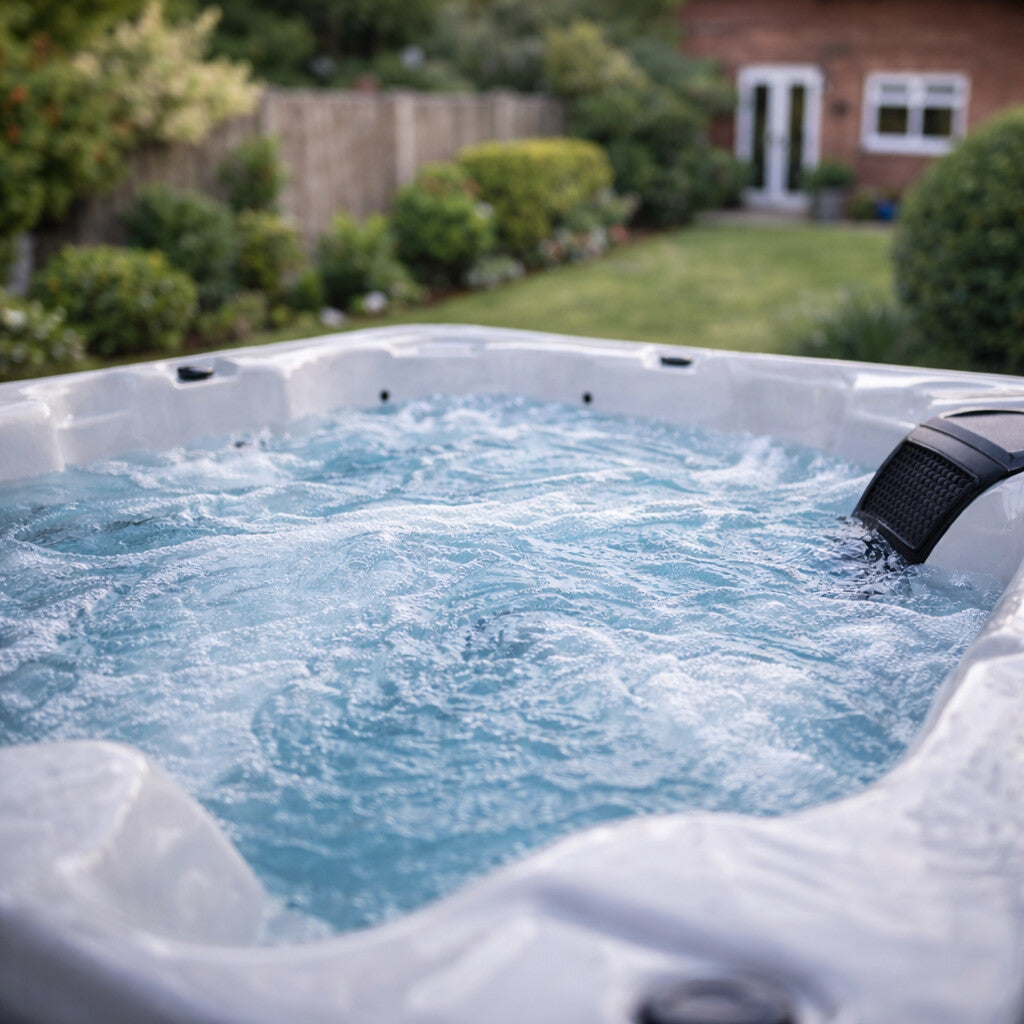
Massage needs water moving at pressure. When you turn the jets on, the pump sound rises and the water makes a clear rushing sound. Opening the air controls can make the massage feel livelier and add more bubbling noise.
An air blower, if fitted, adds its own sound. Waterfalls and fountains can add splashing too. A spa with every feature running will sound different from the same spa with the jets off.
You should still be able to enjoy the experience. A harsh mechanical noise that forces you to raise your voice deserves a check, rather than being dismissed as the price of having good jets.
Vibration through the base
A pump can send vibration into the cabinet and the surface below it. A hollow or poorly supported structure may make a modest pump hum seem more noticeable.
That is why noise isn't only a question of which hot tub you buy. The installation matters too. The base must be strong, level and suitable for the filled spa, without rocking or gaps in the required support.
Does more insulation make a hot tub quieter?
Well-designed insulation can help reduce the sound escaping from the cabinet. It can also support pipework, depending on the type used, and reduce movement. This gives insulation a second benefit alongside keeping the water warm.
In general, a well-insulated cabinet is a better starting point for quiet ownership than a lightly insulated one with comparable equipment. The type, coverage and construction matter more than simply counting layers. Thermal insulation and sound control aren't identical, so “more insulation” isn't a reliable noise rating on its own.
The complete design includes the pumps, their mountings, cabinet panels and base. Insulation also can't remove the sound of water splashing above the shell or people chatting in the garden.
Don't pack extra foam around pumps or block vents to make a spa quieter. Equipment needs the clearances and cooling specified by the manufacturer. Ask the supplier about approved noise-control measures instead.
Will you hear a hot tub inside the house overnight?
With the jets off and the cover secured, a quality, well-insulated spa should be unobtrusive. You may hear a low hum when you stand beside it while water is circulating. That sound shouldn't become a prominent noise inside a house when the spa is working and installed properly.
We wouldn't guarantee that it will be inaudible in every room. A hot tub beneath an open bedroom window is a different case from one further down the garden behind closed windows. A very quiet street, the type of pump and vibration reaching a nearby structure can all change what you hear.
Check from the rooms that matter after installation. Listen with the cover on during normal circulation, then during any stronger filter cycle. Try your usual window positions. A showroom demonstration helps you compare spas, but your garden check tells you how the installation behaves at home.
If a steady hum is clearly audible in a bedroom, ask the installer to investigate the setup. Turning the whole spa off each night isn't a good substitute for fixing a noise issue. Water care, heating and frost protection still need to work.

Choose a position that works for you and your neighbours
Before the base goes in, look beyond the best view from the seats. Where are your bedroom windows? Where are your neighbour's? Which side of the spa gives access to the pumps for servicing?
Give neighbouring homes as much separation as your layout reasonably allows. Avoid putting the equipment side directly beside a bedroom window where you have a better choice. Keep the manufacturer's service access and ventilation clear.
Walls and tight corners can reflect sound. A privacy fence may help the garden feel secluded, but it isn't automatically an acoustic barrier. Planting is useful for privacy too; don't rely on a row of shrubs to solve a pump-noise problem.
If you're considering decking, have its load capacity and support checked. Don't put a heavy filled hot tub on a loose mat or makeshift pads. Any vibration-control layer must be approved for the spa and maintain the required support. Our hot tub base guide covers the structural choices.
An external heat pump, if you add one, has a separate fan and compressor. Its position and sound need considering as well as the spa itself. A quiet hot tub cabinet doesn't tell you how a separate heater will sound.
Can you use a hot tub at night without disturbing anyone?
Yes, a calm evening soak can be a considerate way to use your garden. Think about the whole scene, though. Music, laughter and voices raised over running jets can travel further than the spa's background hum.
A few simple habits make late use easier to live with:
- Use the jets only when you want the massage, then enjoy a quieter soak.
- Turn off optional waterfalls or air features when you don't need them.
- Keep music and voices low, especially near open bedroom windows.
- Secure the cover when you finish and let the normal care routines run.
- Ask your supplier whether adjustable filter cycles can run earlier without reducing the care your spa needs.
Some protection or heating routines may still start outside programmed times. Don't disable them or cut filtration simply to remove all overnight sound. Our guide to leaving a hot tub switched on explains why normal operation matters.
A quick conversation before installation can help too. Tell your neighbours where it will go and that you plan considerate evening use. If they later mention a hum, ask when and where they hear it. That gives you something practical to check.
What about noise rules and neighbour complaints?
There isn't a universal hot tub curfew or one noise figure that makes every installation acceptable. A spa being audible doesn't, by itself, settle whether it is a nuisance. The impact, timing and persistence matter.
In England, government noise guidance explains that councils investigate potential statutory nuisance at any time of day or night. Separate night-noise warning powers can apply between 11pm and 7am. That isn't permission to be disruptive earlier in the evening.
Procedures differ across the UK, so check your local council's guidance if a concern arises. Start with a calm discussion and a record of when the sound occurs. A pump cycling, vibration through a base and late-night music need different solutions.
When a hot tub sounds louder than it used to
Learn your spa's normal sound. A new rattle, squeal or grinding noise, or a loud hum with little water moving, needs attention. Insulation won't fix a worn bearing, restricted flow or a loose component.
Note which operating mode causes the sound, any error message and whether the flow has changed. Check the water level and carry out the filter care allowed in your manual. Our filter-cleaning guide explains the routine.
Don't keep restarting a struggling pump, remove equipment panels while powered, or attempt repairs around live electrics. If noise comes with loss of flow, overheating, leaks, a burning smell or electrical trouble, stop using the spa, follow the manual's shutdown instructions and contact a qualified spa engineer.

What to ask before buying a quieter hot tub
Ask to hear the spa with the jets off, then with them on. Listen to the normal filter cycle as well. This is far more useful than hearing “it's quiet” while the demonstration spa is switched off.
Ask about the circulation pump, cabinet insulation, pump mountings and approved base. If a noise figure is supplied, ask how and where it was measured, and which features were running. Figures taken at different distances or in different modes aren't a fair comparison.
Bring a rough garden plan showing both homes and nearby windows. We can talk through placement and everyday use before you choose from our hot tubs. You want confidence in a peaceful evening, as well as comfort in the seats.
Hot tub noise questions
Are hot tubs noisy when the jets are off?
Usually much less so. You may hear a low hum during circulation, with a stronger sound if a larger pump runs a filter cycle. A quality installation should keep this unobtrusive.
Should a hot tub hum all night?
Some circulation pumps run continuously; others follow programmed routines. A gentle hum can be normal. A new harsh hum, poor flow or sound that intrudes into a bedroom deserves a check.
Can you soundproof a hot tub?
Start with the equipment, insulation, base and placement. Ask the supplier about approved changes. Don't seal the equipment compartment or add materials that block cooling or service access.
Does a cover make a hot tub silent?
No. A fitted cover closes the water surface and helps retain heat, but sound can still come from the cabinet and base. It isn't a replacement for good installation.
Are hot tubs noisy? Aim for a quiet everyday setup
A well-insulated, well-built spa should offer a gentle background hum between uses and a fuller water-and-pump sound during massage. Good insulation helps, and the right base and sensible placement complete the picture.
Hear the spa running before you buy, keep late-night use considerate and investigate changes in its usual sound. That leaves you free to enjoy what you bought it for: warm water, a comfortable seat and an evening that feels properly relaxed.


Share: