

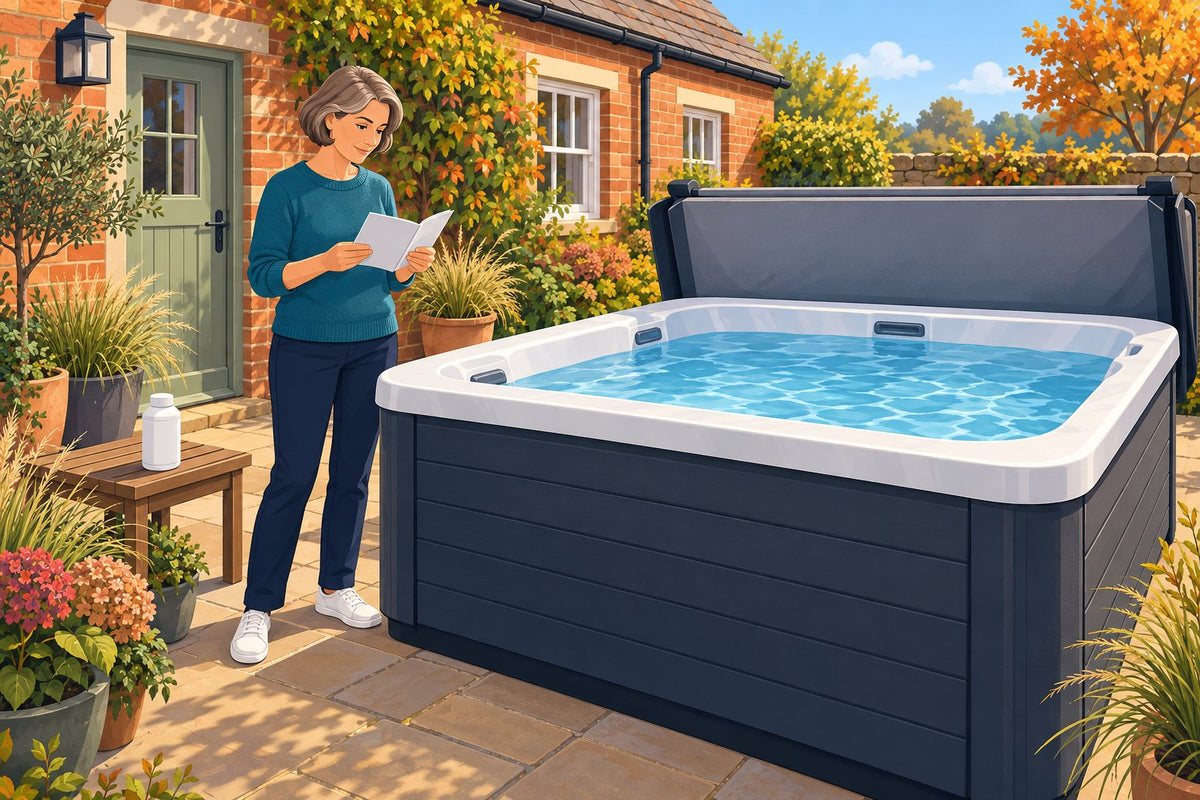
You can wipe a hot tub shell until it gleams and still leave the inside of its plumbing untouched. Water travels through pipes, pumps and a heater before it reaches the jets. Those hidden surfaces need care too.
A proper pipework clean fits into a planned drain and refill. You use a compatible spa plumbing cleaner while the tub still contains water, follow its treatment instructions, then drain, rinse and restart the spa. The exact dose and timing come from the cleaner label and your hot tub manual.
This guide explains what that process does, when to consider it and how to avoid the common mistakes. It’s for private home hot tubs, rather than a cleaning protocol for rental properties or public spas.
Why does hot tub pipework need cleaning?
Body oils, cosmetics and other residues can reach the plumbing as water circulates. A filter catches material passing through it, but it doesn’t scrub the walls of every pipe. Changing the water removes dissolved substances and waste from the tub, yet it isn’t the same as cleaning deposits attached inside the system.
That’s why plumbing cleaning is a separate maintenance task. It reaches places you can’t wipe with a cloth. It also means a beautifully clean shell isn’t proof that the whole water circuit is clean.
What is biofilm?
Biofilm is a community of microorganisms attached to a surface within a protective layer. It can form in wet plumbing and can make contamination harder to deal with than organisms freely suspended in the water.
Don’t diagnose it from a photograph of foam. Grease, cleaner residue, scale and other material can look similar. Repeated water problems may justify a system clean or professional check, but the appearance of a deposit alone doesn’t identify what it is.
Pipe cleaner, sanitiser and descaler do different jobs
The bottles on a water-care shelf aren’t interchangeable. Check the purpose as well as the name, especially when a product promises a “deep clean”.
| Product | Main job | What it doesn’t replace |
|---|---|---|
| Spa plumbing cleaner or flush | Helps loosen and remove residues inside the water circuit before draining | Routine sanitiser and testing |
| Chlorine or bromine sanitiser | Controls microorganisms in the water as part of the normal treatment system | Physical cleaning and a prescribed pipework clean |
| Filter cleaner | Cleans the removable cartridge using its own instructions | Cleaning the entire plumbing circuit |
| Scale treatment | Addresses mineral deposits where the product and spa allow | All organic residues or every water-quality problem |
Some products have more than one function. That still doesn’t make them suitable for every spa or treatment system. Ask your supplier to confirm compatibility with the shell, seals, plumbing and any salt, mineral or other water-care equipment.
BISHTA’s water-treatment guidance stresses that residual sanitiser and regular testing remain essential. A plumbing flush doesn’t turn a hot tub into a chemical-free system.

When should you flush hot tub pipes?
Start with the maintenance schedule for your spa and water-care system. Pipe cleaning is usually planned before a water change, while the old water is still available to carry the treatment around the plumbing. Don’t drain first and then discover that the cleaner needs a full tub.
There isn’t one interval that suits all hot tubs. Manufacturer advice varies. Hot Spring, for example, includes plumbing flushing in its annual maintenance guidance and says it can also be done at drain-and-refill time. Follow the schedule for your own spa rather than borrowing a different model’s routine.
Our guide to changing hot tub water explains the separate decision about when the water needs replacing. Keep the two tasks linked, but don’t treat them as identical.
When a routine clean may not be enough
Speak to the retailer or a qualified spa engineer if problems keep returning soon after a correct refill, particularly when sanitiser won’t hold despite sound dosing and light use. Stale smells, persistent slime or recurring debris also deserve attention.
These symptoms have several possible causes. Old test strips, a dirty cartridge, poor water balance or faulty circulation can mislead you. Our article on high chlorine demand helps rule out common reasons before you blame the pipes.
A tub with a long period of neglect, unknown history or suspected contamination may need a prescribed clean and disinfection programme. Don’t improvise a stronger dose and assume the problem is solved.
What to check before you start
Set aside enough time for the treatment, draining, rinsing, refilling and heating. Some cleaners work through a short circulation cycle; others need a much longer contact period. Read the label before you choose the day.
Have the spa manual, compatible cleaner, an accurate way to measure the dose, suitable gloves and any other protection specified on the label. You’ll also need a clean hose, soft cloths, fresh water-care supplies and a clean cartridge ready to refit.
Plan where the treated water will go. Cleaner-containing water isn’t automatically suitable for the garden or a surface-water drain. Follow the product’s disposal instructions and your local water company’s advice. Check the route before adding treatment.
Keep children and pets away throughout. Nobody should bathe during a plumbing-cleaning treatment, even if the water looks normal.
How to clean hot tub pipework step by step
1. Confirm the product and the treatment settings
Check the dose against the spa’s actual water capacity. Read the instructions for water temperature, any required sanitiser level, cover position and which pumps or controls should run. Don’t estimate a dose from the number of seats.
If the cleaner instructions and spa manual appear to conflict, stop and ask the supplier. There’s no benefit in getting halfway through a clean before finding that the equipment shouldn’t run in the requested way.
2. Prepare the filter and accessories as directed
Some cleaners require cartridge filters or certain dispensers to be removed. Others have different instructions. Follow both the product directions and the spa’s safe removal procedure, including switching off where required.
Running without a cartridge during an approved cleaning programme is different from using the hot tub without one. Don’t remove parts by default. Clean the cartridge separately using a proper filter product, and rinse thoroughly. Our filter-cleaning guide covers that task.
3. Add the measured cleaner and circulate
Add the cleaner at the place and in the way its label specifies. If pre-dissolving is required, use the stated method. Never combine concentrated chemicals in a bucket or mix cleaning products to make a stronger treatment.
Run the prescribed pumps and cycle, with the water at the required level. Set accessible jet and diverter controls as directed so the treatment reaches the relevant circuits. Don’t force valves, take equipment apart or keep running a pump that has lost flow.
4. Allow the full contact time
Keep to the treatment period, including any repeat pump cycles. Foam or loosened debris may appear with some products. Follow the label’s handling instructions and avoid touching or breathing in spray from the treatment.
More foam doesn’t prove that more bacteria have been removed. Equally, little visible residue doesn’t prove the cleaner has failed. The process should be judged against the instructions, not the drama on the water surface.
5. Switch off, drain and rinse
Once treatment is complete, shut down the spa as its manual directs before draining. Never let pumps or the heater run dry. Drain to your agreed disposal route, then remove loosened residue from the shell with an approved method.
Rinse as directed to remove cleaner left behind. Some products require further rinsing or another fill-and-drain stage. Don’t skip that because the shell looks tidy. Don’t add household washing-up liquid, bleach or bathroom cleaner to finish the job.
6. Refill, restart and test before bathing
Close the drain, refit the clean cartridge and follow the manual’s filling and priming procedure. Before use, run the hose away from the tub to clear standing water. Keep its outlet above the water surface and use the appropriate backflow protection.
Restore power only when the spa is ready for it. Confirm normal circulation, check for leaks and follow the prescribed start-up water treatment. Test sanitiser, pH and the other parameters required by your system before anyone gets in. Warm, clear water alone isn’t a pass.

What if foam or flakes return after the refill?
Check the simpler explanations first. Was the cartridge rinsed fully? Was the plumbing cleaner removed according to the label? Have fresh test results confirmed the water balance? Residual cleaner, detergents on swimwear and mineral scale can all complicate the picture.
Flakes aren’t a reliable home test for biofilm. If material keeps returning, take photographs and note when it appears, which pumps are running and the water readings. Ask the supplier to assess the pattern before trying another chemical.
Persistent hard deposits may call for a different approach. Our hot tub limescale guide explains mineral scale and why it shouldn’t automatically be treated as organic dirt.
If water quality remains doubtful, keep the spa out of use until the cause and remedy are clear. A second blind dose can leave you with two problems instead of one.
Keep the plumbing clean between water changes
The most useful routine is still straightforward. Test before use, maintain the required sanitiser, keep the filter clean and deal with water-balance problems promptly. Showering before a soak reduces the oils and cosmetics entering the system.
Record water changes and plumbing treatments so you know what was done and when. Keep circulation and care settings within the manufacturer’s guidance. If the spa will be left unused, arrange the required checks or seek advice on a proper shutdown.
Hot tub pipework cleaning questions
Can you clean the pipes without draining the tub?
A drain-and-refill plumbing cleaner normally needs the treated water removed after use. Don’t bathe in it or leave it as your normal water unless the product expressly permits that use. Routine water-care products are a different category.
Does shock treatment replace a plumbing flush?
No. Shock treatment has its own role in water care. A prescribed pipework clean addresses deposits in the circuit and usually includes draining and rinsing. Follow the system’s separate cleaning and disinfection instructions.
Should you flush a brand-new hot tub?
Ask the retailer what commissioning has been completed and what the manufacturer requires. Some products recommend a start-up clean, but that isn’t a universal instruction for every new spa.
Can you use vinegar to flush hot tub pipes?
Don’t substitute it for a compatible spa plumbing cleaner. Household products may be unsuitable for components or leave residues, and they don’t provide the prescribed treatment process.
How to clean hot tub pipework with confidence
Choose a compatible product, follow its complete treatment, then drain, rinse and restart with properly treated fresh water. Keep cleaning, disinfection and testing as separate jobs that support each other.
If you’re unsure which process your spa needs, ask us before adding anything. We can help you plan sensible care for the hot tubs we supply, so your next soak starts with confidence in the whole system, not just a shiny shell.


Share: