


So, you’ve found the hot tub. Or you’re close.
You can already picture it: warm water, crisp evening air, soft bubbles, and your favourite people sinking into the seats after a long week. Lovely.
But before delivery day arrives, there’s one very practical job to get right. The base.
A hot tub needs a strong, flat, level surface. Not grass. Not mud. Not a soft patch of soil at the bottom of the garden. A proper base keeps your spa supported, steady, and ready for years of relaxing use.
Here’s the thing. A hot tub is heavy before it has any water in it. Fill it with hundreds of litres of water, then add people, and the weight rises fast. That weight needs to spread evenly through the base.
If it doesn’t, the spa can settle, twist, or sit unevenly.
No one wants that. Especially not after getting the garden ready for its big moment.
If you’re still choosing between different hot tubs, this is the perfect time to plan the base too. It makes delivery smoother. It makes installation simpler. And it gives your new spa the calm, solid start it deserves.
First things first: your hot tub needs strength
A hot tub base has one main job. It must hold the full weight of the spa when it’s filled, heated, and in use.
That means the surface needs to be:
- Strong enough to carry the filled hot tub
- Flat across the whole footprint
- Level from side to side and front to back
- Stable through wet weather, frost, and daily use
- Large enough for the full base of the hot tub
Think of it like putting a dining table on an uneven pub floor. One leg drops, the table rocks, and before long someone’s holding a coaster under the corner. Fine for a pint. Not fine for a hot tub.
The base should support the whole underside of the spa, not just the corners. Gaps, dips, slopes, and soft spots can place stress where you don’t want it.
So what can you use?

Concrete bases: simple, solid, and built for the job
A concrete base is one of the most reliable choices for a hot tub.
It’s strong. It’s clean. It can be made to the exact size you need. Once it has been laid well, it gives your hot tub a firm, level platform that won’t shift each time the weather changes.
Most people choose a concrete slab when they’re creating a new hot tub area from scratch. It works well for many gardens and can sit neatly under paving, beside decking, or as part of a landscaped spa area.
A good concrete base should be planned before delivery. It needs time to set and cure before the hot tub goes on it. Your builder or landscaper can guide you on depth, ground prep, and drainage, but the key point is simple: the slab must be strong, flat, and level.
A slight fall around the wider garden may help rainwater move away, but the hot tub itself needs to sit level. The spa is not a shed. It’s full of water, jets, pumps, seats, and pipework.
Treat the base with care.

Patios and paving: lovely when they’re firm and flush
A patio can be a great hot tub base, especially if it’s already in the right place.
It can look smart too. Stone, porcelain, concrete slabs, and block paving can help your hot tub blend into the garden, rather than making it feel like an afterthought. Summer evenings feel better when the whole space works together.
But not every patio is ready.
Some patios have small dips. Some slabs rock. Some have joints that have opened up over time. Some were laid for chairs, planters, and a barbecue, not a filled hot tub. That’s a big difference.
Before using a patio, check that the slabs are firm, flush, and level. If one corner moves when you step on it, that’s your warning sign. If water pools in the middle, that’s another clue. The base needs to support the spa evenly.
A well-laid patio can work beautifully. A tired patio may need lifting, relaying, or replacing in the hot tub area.
Honestly, it’s better to sort this before the spa arrives than after.

Decking: beautiful, but it needs proper support
Hot tubs and decking can look stunning together.
There’s something very inviting about stepping out onto warm-looking boards, lifting the cover, and slipping into the water while the garden lights glow. It has that boutique spa feeling, without leaving home.
But decking needs care.
A hot tub should not sit on standard lightweight decking unless the frame has been built to take the load. The boards are only the surface. The real strength comes from the joists, posts, bearers, fixings, and the ground beneath them.
If you want your hot tub on decking, speak to a qualified joiner, builder, or structural professional before installation. They can confirm whether the deck can carry the filled weight and whether extra supports are needed.
You also need service access.
Every hot tub has access panels for maintenance and repairs. If the spa is sunk into decking, those panels must still be reachable. A removable deck section can help keep the look clean without blocking the parts your engineer may need.
Decking can be brilliant. It just needs to be built for the job, not guessed.

Grass, mud, and bare ground: please don’t
Can a hot tub go on grass?
No. Not as a proper long-term base.
Grass, mud, and bare earth are too soft. They hold water, move with the weather, and can sink under the weight of a full spa. Even if the ground looks firm in July, it may behave very differently after a wet November weekend.
A hot tub placed on grass can start level, then settle over time. One side drops a little. Then a little more. Before you know it, the waterline looks off and the spa is not supported as it should be.
There’s also the mess.
Mud around a hot tub is never fun. It sticks to feet, works its way into the water, and makes your lovely garden retreat feel less like a spa and more like a festival campsite after rain.
So, no grass. No mud. No bare ground.
Build the base first. Then enjoy the bubbles.
Level means level
This part matters so much it deserves its own section.
Your hot tub base needs to be level.
Not “near enough”. Not “it only slopes a bit”. Level.
When a hot tub sits on a slope, the waterline looks uneven. That’s the bit you notice first. The bigger issue is the weight. If the water and spa load don’t spread evenly, some parts of the shell and frame can take more strain than others.
Over time, that can cause problems.
A level base also helps covers sit better, steps feel safer, and the whole area look more polished. It’s the difference between “that’ll do” and “that looks spot on”.
Use a long spirit level when checking the base. Better still, ask your builder or landscaper to check it as part of the work. For existing patios and decking, check several points, not just one edge.
Think about the power while you plan the base
Once the base is sorted, the next question is power.
Your hot tub needs a suitable electrical supply nearby. Some spas are 13 amp plug and play models. Others need a 32 amp supply fitted by a qualified electrician. The right setup depends on the model, the cable route, and your home electrics.
This is worth planning at the same time as the base.
Why? Because outdoor cabling often needs a safe route from your property to the hot tub area. If you’re digging, laying concrete, building decking, or changing the patio, it makes sense to think about cable routes before everything is finished.
You can read our full hot tub electrics guide here.
Water and electricity are not a DIY pairing. Use a qualified electrician and make sure the supply is suitable for the hot tub you choose. You’ll get a safer setup, a neater finish, and far less stress on delivery day.

How big should the hot tub base be?
The base should be at least the full footprint of the hot tub.
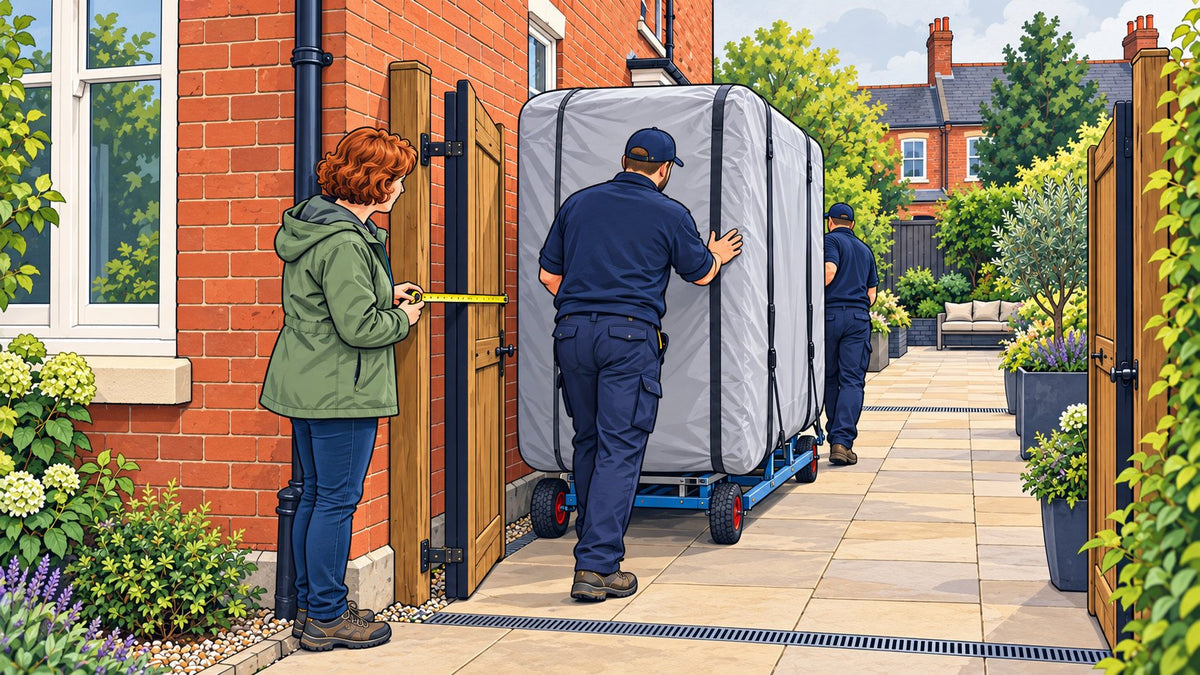
In most cases, it’s wise to allow a little extra space around it too. That gives you room for steps, cover lifters, access panels, and safe movement around the spa. It also helps the area feel finished, not squeezed in.
Before you build anything, check the exact dimensions of the model you’re buying. Then plan the base, access route, and power position together.
A hot tub is not just the square it sits on. You need space to use it well.
Quick FAQ: hot tub bases
How big should the hot tub base be?
The base should be at least the full footprint of the hot tub.
In most cases, it’s wise to allow a little extra space around it too. That gives you room for steps, cover lifters, access panels, and safe movement around the spa. It also helps the area feel finished, not squeezed in.
Before you build anything, check the exact dimensions of the model you’re buying. Then plan the base, access route, and power position together.
A hot tub is not just the square it sits on. You need space to use it well.
Can I put a hot tub straight onto paving slabs?
Yes, if the paving is firm, level, and strong enough. Loose, rocking, uneven, or poorly supported slabs need fixing first.
Is concrete better than decking for a hot tub?
Concrete is usually simpler from a support point of view. Decking can work, but it must be designed to hold the full filled weight of the spa.
Does a hot tub base need drainage?
The area around the hot tub should manage rain and splash water well. The hot tub itself still needs a level base, but the wider area should not leave water sitting where it can cause damp or mess.
Can I use gravel as a hot tub base?
Some people use compacted gravel systems, but for many buyers, concrete, a suitable patio, or properly supported decking feels more secure and easier to live with. If you’re considering gravel, ask your hot tub supplier before you build it.
Should I build the base before choosing the hot tub?
Ideally, choose the hot tub first, or at least narrow down the size. The base should match the spa, not the other way round.
What base do I need for a hot tub?
You need a strong, flat, level base that can support the full weight of your hot tub when it’s filled with water and people.
Concrete is a smart choice if you’re starting from scratch. A solid patio can work well if it’s firm, flush, and level. Decking can look beautiful, but only when it has been properly strengthened and planned with service access.
What base do I need for a hot tub? The simple answer
You need a strong, flat, level base that can support the full weight of your hot tub when it’s filled with water and people.
Concrete is a smart choice if you’re starting from scratch. A solid patio can work well if it’s firm, flush, and level. Decking can look beautiful, but only when it has been properly strengthened and planned with service access.
Grass, mud, and bare ground are out. They can sink, shift, and cause problems over time.
Get the base right and everything else feels easier. Delivery is smoother. The spa sits as it should. The waterline looks right. And your garden starts to feel like the place you had in mind from the beginning.

Share: