

Why is my hot tub not heating properly?
A hot tub that refuses to warm up can turn an evening soak into a rather chilly inspection job. The good news is that the heater itself isn't always at fault. A setting, slow water flow, low water level or recent refill can all make a healthy hot tub seem as though it has stopped heating.
Start with the simple checks below. They don't involve tools or opening the cabinet. If the hot tub trips an RCD, shows signs of an electrical fault or still won't heat after the safe checks, stop there and arrange professional help.
First, is it actually faulty or simply heating slowly?
Fresh tap water takes hours to reach hot-tub temperature. The exact time depends on the volume of water, starting temperature, heater output, weather, insulation and whether the cover is fitted. A cold refill on a winter afternoon will take longer than a small top-up in July.
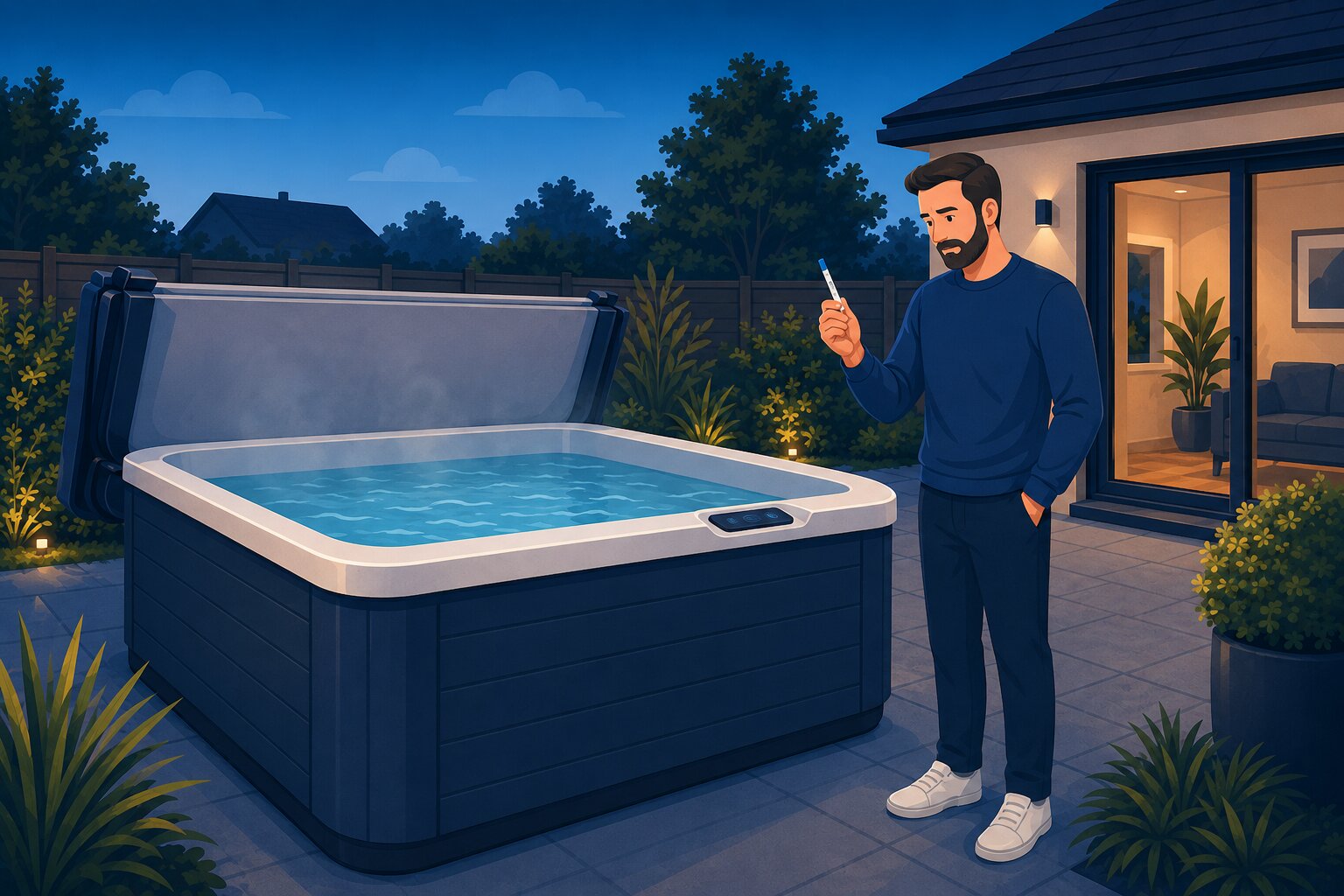
Check the current water temperature against the set temperature on the control panel. Fit the cover securely, leave the jets off and check again later. If the displayed temperature is rising, even slowly, the heater is doing something.
Don't judge it by dipping a hand in the water. A few degrees of change can be hard to feel, especially outdoors. Use the control-panel reading or a separate spa thermometer if you suspect the displayed value is wrong.
The most common reasons a hot tub won't heat
1. The set temperature or heating mode has changed
Begin at the control panel. Make sure the target temperature is higher than the current water temperature. Then check the operating mode.
Some control systems have standard, ready, rest, economy or sleep-style modes. The names vary. An energy-saving mode may only heat during set filtration periods, so the water can sit below your chosen temperature between cycles. A keypad lock can also stop a temperature change from taking effect.
Use the manual for your exact control panel rather than pressing a heroic combination of buttons and hoping for the best. H2O hot tubs use Gecko control systems, and their menus and warning messages vary between keypads.
2. The hot tub needs more time
A hot tub is designed to hold heat efficiently, not heat a full body of cold water in a few minutes. Keep the cover on while it warms. Running the air controls, jets or leaving the water exposed to cold air increases heat loss and can stretch the wait.
If the tub has recently been refilled, give it a fair chance. The manufacturer's start-up instructions should be your guide. If the temperature doesn't rise at all after a reasonable covered heating period, move through the checks below.
3. The water level is too low
The heating system relies on water moving through it. If the level falls below the filter opening or intake, the pump may draw air and the controls may prevent the heater from running.
Top up to the level stated in the manual. Don't guess from the top edge of the shell because the correct level differs between spas. Look for the fill marker or use the filter opening and highest jets as the reference described by the manufacturer.
4. A dirty filter is restricting water flow
This is one of the most useful checks because it affects both heating and water quality. A clogged filter makes the circulation pump work harder and reduces flow through the heater. Many control systems switch the heater off when flow is too weak, protecting it from overheating.
Switch the hot tub off as directed in its manual before removing the filter. Rinse loose debris from between the pleats with clean water. If the filter is greasy, scaled, damaged or still dirty after proper cleaning, it may need a deeper clean or replacement.
Don't run the spa without its filter as a routine fix. Debris can reach the pump and heater, swapping one small problem for a much more expensive one.
5. There is an airlock after a drain and refill
If the problem began straight after refilling, trapped air may be stopping the pump from moving water. You may hear the pump running without seeing normal circulation, or the panel may show a flow-related warning.
Follow the priming instructions for your exact spa. Many hot tubs should be filled through the filter housing to help push air from the pipework. Don't keep running a pump that isn't moving water, as dry running can damage it.
If the manual's normal priming steps don't restore flow, call the retailer or a spa engineer. Loosening pump unions or opening the cabinet isn't a sensible beginner task beside a water-filled electrical appliance.

6. The supply has tripped or become unstable
If the screen, pumps and lights are all dead, check whether the house circuit, outdoor RCD or isolator has switched off. A loss of power is different from a heater fault, even though the result feels the same.
Use the reset method in the manufacturer's instructions only if it is safe to do so. If an RCD or breaker trips again, don't keep resetting it. Isolate the hot tub and arrange an electrician or spa engineer. Repeated tripping is a safety warning, not a stubborn button.
Our hot tub electrical supply guide explains the difference between a 13A connection and a dedicated 32A supply. Electrical installation and fault-finding should be handled by a competent electrician.
7. The heater, sensor or control system has developed a fault
A failed heating element is only one possibility. Temperature sensors, high-limit protection, relays and the main control pack can also stop the heater from being energised. Sometimes the panel shows an error. Sometimes the tub appears to circulate normally but never gets warmer.
These faults need proper testing. Don't remove access panels, touch terminals or bypass a safety device. Record the error message, current temperature, set temperature and what the hot tub was doing when the problem started. That information helps an engineer narrow down the cause.
Why do the jets work when the hot tub isn't heating?
The jet pumps and heater are separate parts controlled by the same system. A jet pump can run even when the heater has been disabled by low flow, a sensor warning or an internal fault.
Power configuration matters too. On many 13A hot tubs, the available electrical supply means the heater pauses while the main jets run at high speed. The water may cool during a long session, especially in cold weather. That can be normal rather than a breakdown. Our guide to how a hot tub works explains the roles of the heater, circulation system and pumps.
A safe 10-minute hot tub heating checklist
- Read any warning or error shown on the control panel.
- Compare the current temperature with the set temperature.
- Check that the spa is in its normal heating or ready mode.
- Confirm the keypad or temperature setting isn't locked.
- Check the water is at the level required by the manual.
- Look for normal circulation from the water outlets.
- Inspect and clean the filter using the manufacturer's method.
- Fit the cover properly and allow time for the temperature to rise.
- Note any unusual noise, smell, leak or repeated electrical trip.
- Stop and seek help if the simple checks don't identify the cause.
This list is designed for checks you can make without opening the cabinet. Keeping that boundary clear matters. Water and mains electricity are not a pairing for improvised repairs.

What do hot tub heater error codes mean?
There isn't one universal list. A code that means low flow on one control system can mean something different on another. The same letters may even change meaning between software versions.
Take a clear photo of the message and find the manual for the exact keypad and control pack. Don't clear the code before recording it. Common categories include:
- low or interrupted water flow
- high-limit protection
- temperature-sensor faults
- freeze protection
- heater or control-system faults
A code is a clue, not permission to bypass the safety feature that produced it.
Can you use a hot tub that isn't heating?
Don't use it until you know why it has stopped heating. Stay out if the RCD has tripped, the water is cloudy, circulation has stopped, there is a leak near electrical equipment, or you notice a burning smell or damaged cable.
If the heater is merely taking time after a refill, keep the cover on and wait until the water reaches a comfortable, safe temperature and the water is correctly treated. Our hot tub water care guide covers the checks that matter before bathing.
How to help your hot tub hold its temperature
A sound hot tub should maintain its set temperature with much less effort than it takes to warm a cold fill. These habits reduce unnecessary heat loss:
- keep the insulated cover clean, dry and properly fitted
- close air controls after use if the manufacturer recommends it
- maintain the correct water level
- keep filters clean and circulation settings correct
- leave the hot tub powered as intended instead of repeatedly cooling and reheating it
For most permanently filled spas, leaving the system running is both kinder to the equipment and more convenient. Read more about whether to leave your hot tub on all the time.
Hot tub not heating FAQs
How long should a hot tub take to heat after filling?
Allow many hours rather than expecting instant heat. The time changes with water volume, heater output, starting temperature, weather, insulation and cover fit. Follow the start-up guide for your spa. If the reading doesn't rise at all during a covered heating period, begin the safe checks above.
Why is my hot tub warm but not reaching the set temperature?
Check the heating mode, cover fit, filter condition and circulation. Cold weather, open air controls and long use with the jets running can increase heat loss. On some 13A systems, the heater pauses while high-speed jets operate.
Can a dirty filter stop a hot tub heating?
Yes. Restricted water flow can make the controls disable the heater to protect it. Clean the filter correctly and check for normal circulation. If a flow warning remains, arrange professional diagnosis.
Should I reset the breaker if the hot tub isn't heating?
Follow the reset procedure in your manual only when there are no signs of damage or water near electrical parts. If the breaker or RCD trips again, stop resetting it, isolate the tub and call a competent professional.
Who should repair a hot tub heater?
Use a trained spa engineer for the hot tub's internal components. A competent electrician may also be needed when the fault concerns the fixed electrical supply, consumer unit, isolator or socket.
Why is my hot tub not heating? The sensible next step
Start with temperature settings, operating mode, water level, circulation, filter condition and a properly fitted cover. Those checks solve many apparent heating problems without a screwdriver in sight.
If the temperature stays flat, an error remains or the electrical protection trips, stop using the spa and ask for help. If you own an H2O hot tub, contact our team through the H2O Hot Tubs website with the model, serial number, error message and a short description of what you've checked. Good fault information usually gets you to the right answer faster.


Share:
1 comment
My hot tub is not working correctly pumps run intermittently there was a high temp 42 registered I turned off left 24 hrs before turning back on and still making priming noise like an air lock etc which it isn’t checked filter etc can u give me calll to see if anything else can check or if need someone to come out n have look at it 07830181766