

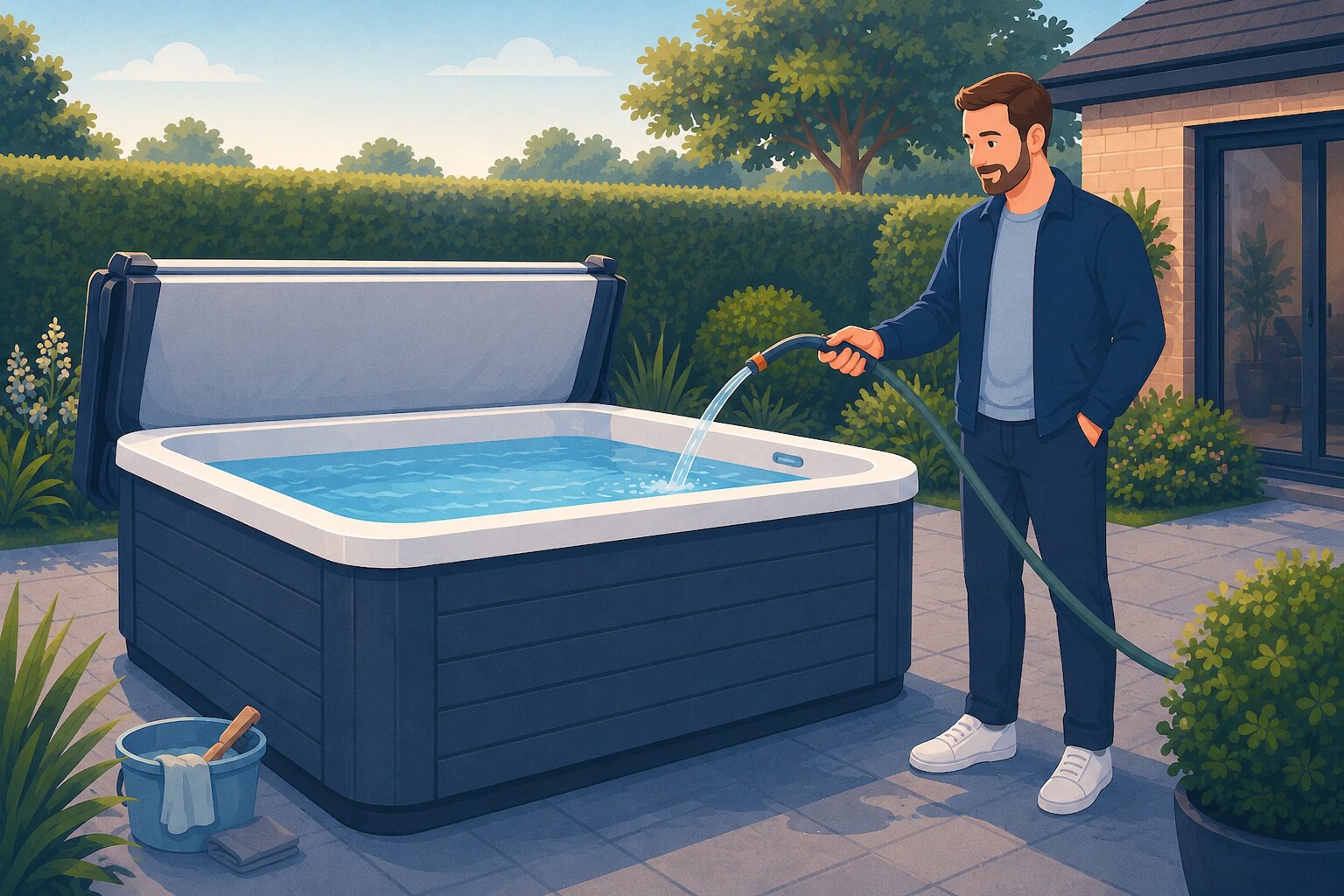
Hot tub water does not stay fresh for ever, even when it still looks clear. Warm water, sanitiser, body products and everything brought in by bathers gradually leave behind dissolved material that a filter cannot remove.
So, how often should you change hot tub water? A sensible working range is usually between one and three months, but there is no single date that suits every owner. How often you use the spa, how many people get in, the treatment system and the condition of the water all affect the answer.
This guide explains when a planned water change is due, the warning signs that mean you should act sooner and how to drain and refill your hot tub safely.
How often should you change hot tub water?
BISHTA's domestic water-treatment guidance recommends changing hot tub water ideally every month and no later than every three months for the best water quality. Some manufacturers of traditional chlorine or bromine systems suggest a typical interval of around three to four months.
Those figures are not as contradictory as they first appear. They describe broad intervals for different tubs, treatment methods and patterns of use. Your own manufacturer's instructions should come first, but the water itself should also guide you. A tub used daily by a family will normally need fresh water sooner than one used occasionally by two careful bathers.
Do not treat the longest interval as a target. If the water becomes difficult to balance, develops persistent foam or no longer responds to normal treatment, changing it sooner is often the simpler and safer answer.
Why does hot tub water need changing?
Your filter traps particles, while chlorine or bromine controls harmful microorganisms. Neither process removes everything dissolved in the water.
Each bathing session can add perspiration, natural oils, cosmetics, detergent residue and other organic material. Water-care products add dissolved material too. As the weeks pass, this build-up can make the water harder to manage, even if routine test results sometimes look acceptable.
Fresh water gives you a clean starting point. It can make balancing easier, reduce persistent foam and help the sanitiser do its job more predictably. A water change is not a substitute for regular care, but it is an essential part of it. Our hot tub water care guide explains the checks that help keep each fresh fill in good condition.
Seven signs your hot tub water needs changing sooner
A calendar is useful, but these practical signs matter more. If several appear together, a drain and refill is usually worth considering.
1. The water is difficult to balance
Freshly filled water may need adjustment, but readings should become reasonably stable once it is balanced. If pH or alkalinity keeps drifting despite careful, measured treatment, old water may be part of the problem.
2. Sanitiser disappears unusually quickly
Chlorine or bromine is consumed as it deals with contamination. A sudden rise in demand can follow a busy weekend, but repeated low readings soon after correct dosing suggest that the water has a heavy organic load or another problem that needs attention.
3. Cloudiness keeps returning
Cloudy water can have several causes, including poor filtration, low sanitiser, unbalanced water or contamination. If you have cleaned the filter, corrected the balance and treated the water properly but the cloudiness returns, starting again with fresh water may be the most practical fix.
4. Foam comes back after normal treatment
A little aeration is normal when the jets run. Thick, lasting foam is not. Detergent, body products and dissolved material can all contribute. Persistent foam after the underlying habits and filter care have been addressed is a strong reason to replace the water.
5. The water has an unpleasant smell
A strong chemical or musty smell should not be ignored. It can point to combined chlorine, contamination or water that is no longer responding well to treatment. Do not use fragrance to disguise it.
6. The water feels dull, sticky or irritating
Water that leaves skin feeling coated, or causes unexpected irritation, needs investigation. Stop bathing, check the water and follow the chemical manufacturer's directions. If you cannot restore safe, comfortable water with normal treatment, drain and refill.
7. You cannot remember the last water change
If there is no record and the water may already be several months old, it is safer to establish a fresh baseline. Record the refill date afterwards so the next decision is easier.

What makes hot tub water need changing more often?
Water life is shaped by what goes into the tub and how well the system removes or treats it.
Frequent use and more bathers
Four people using a spa regularly create more demand than one or two occasional bathers. Parties, school holidays and repeated daily sessions can shorten the useful life of the water. Test more often during busy periods rather than relying on your usual routine.
Body products and detergent residue
Moisturiser, make-up, fake tan, hair products and laundry detergent can all enter the water. Showering before use and rinsing swimwear in clean water, without detergent, can reduce the load.
Filter and circulation problems
A dirty filter or poor circulation leaves the treatment system working at a disadvantage. Clean the filter at the interval in your manual and replace it when it is damaged or no longer cleans properly. Check the water level too, as a low level can affect flow in some tubs.
Missed or uneven water care
Letting sanitiser drop too low gives contamination more opportunity to build. Overdosing does not solve that habit and may create other problems. Use a reliable test method, dose accurately and follow the instructions for your chosen system.
Outdoor contamination
Leaves, soil, pollen and rainwater can enter an uncovered tub. Keep the cover clean and fitted when the spa is not in use. If you are exploring hot tub ownership, H2O Hot Tubs has further practical advice for planning and day-to-day care.
Can shock treatment save old hot tub water?
Shock treatment can help oxidise organic contamination and restore sanitiser performance after heavy use or certain water problems. It cannot remove all the dissolved material that has accumulated over weeks or months.
If the water is within its normal service period and has a specific, recent problem, shocking may be appropriate. Follow the product label, keep the cover open for the stated period and do not bathe until the water is back within the safe range for your system. Our guide to how to shock a hot tub covers the process in more detail.
If the water is old, repeatedly unstable or persistently foamy, adding more chemicals may only delay the necessary refill. Fresh water is often the clearer route back to control.
How to change hot tub water safely
Check the instructions for your particular spa before you begin. Drain points, refill routes and start-up procedures vary between models.

1. Choose a suitable time
Allow enough time to drain, clean, refill, heat and balance the tub before you next want to use it. Avoid leaving an empty spa exposed to freezing conditions. If frost is possible, follow the winterising advice in the manual or use a trained engineer.
2. Let the water cool and plan where it will go
BISHTA advises letting the water cool overnight before draining. The residual disinfectant may dissipate during that time. Check local requirements and your product instructions before discharging treated water.
3. Turn off the power
Isolate the hot tub at its proper electrical supply before draining. A pump, heater or circulation system must not run without enough water. If you are not sure how to isolate it safely, stop and ask a qualified person.
4. Drain using the approved method
Use the spa's drain connection or another method permitted by the manufacturer. Attach the hose carefully and avoid forcing or cross-threading fittings. Route the water where it will not flood a building, saturate the base or run onto a neighbour's property.
5. Clean the empty shell and filters
Wipe the shell with a soft cloth and a cleaner approved for hot tubs. Household cleaners can leave residues that create foam after the refill. Rinse as directed, clean the filters and inspect the cover and accessible fittings. Our guide to cleaning your hot tub gives a fuller routine.
6. Refill through the correct point
Many manufacturers tell owners to refill through the filter compartment or a specific standpipe to reduce the risk of trapped air. Follow your manual rather than guessing.
Before connecting a stored garden hose, run it away from the tub for a few minutes. Keep the hose outlet above the surface instead of immersing it. This helps reduce the risk of stagnant hose water entering the spa and protects the mains supply from backflow.
7. Restart, test and balance
Once the water reaches the correct level, refit everything required by the manual and restore power. Check that circulation is normal. Test and adjust the water in the order recommended for your treatment system, then add sanitiser accurately.
Do not get in just because the water is warm. Wait until the water is fully circulated, clear and within the safe ranges stated by the spa and chemical manufacturers.
Where should you drain hot tub water?
The right destination depends on the products used, local drainage arrangements and the condition of the water. BISHTA notes that cooled water with its disinfectant residual allowed to dissipate may sometimes be used on a garden, while owners who prefer not to do that can direct it to a main drain.
Never keep discharging a large volume onto the same patch of ground. Avoid waterlogging, puddles and run-off. Do not send water into a surface-water drain unless you know that this is permitted. If the water has received a recent treatment, follow that product's disposal instructions and local water-company advice.
Should you change all the water or only part of it?
A partial water change can dilute a high chemical reading or reduce some dissolved material. It is useful when the water is otherwise fairly fresh and you are correcting one defined issue.
It is not the same as a full water change. If the water is old, has a persistent hygiene problem or needs repeated correction, replacing all of it provides a more reliable reset. Never mix incompatible products, and do not use partial draining to avoid dealing with a filtration or maintenance fault.
Frequently asked questions about changing hot tub water
Can I leave my hot tub empty after draining it?
Only if the manufacturer permits it and you have prepared the spa correctly. An empty tub can be vulnerable to freezing, trapped water in plumbing, weather exposure and movement. For a routine water change, clean and refill it promptly.
How long does a hot tub water change take?
It depends on the spa volume, drain method, water pressure and starting temperature. The draining and refilling may take several hours, while reheating can take much longer. Plan the change for a day when you do not need the tub.
Can I drain the tub straight after adding chlorine?
Avoid it unless the chemical instructions or a water-care professional tell you otherwise. Recently treated water may have a high disinfectant residual. Let the water cool and follow the product label, local rules and BISHTA guidance on responsible disposal.
Why is my new water cloudy?
Fresh tap water can still need balancing, and cloudiness may come from minerals, an incorrectly seated filter, poor circulation or chemical additions made in the wrong order. Check the manual, test accurately and give the water time to circulate. Do not add several products at once without understanding the cause.
How often should you change hot tub water? Use the water as your guide
Plan for a full water change within the interval set by your manufacturer and treatment system. For UK owners, BISHTA's guidance of ideally monthly and no later than three months is a useful quality-focused reference.
Heavy use, body products, poor filtration and unstable readings can all bring the date forward. If the water no longer stays clear, balanced and comfortable after correct care, do not keep adding chemicals to an exhausted fill. Drain safely, clean the spa, refill through the correct point and start again with a measured routine.


Share: