


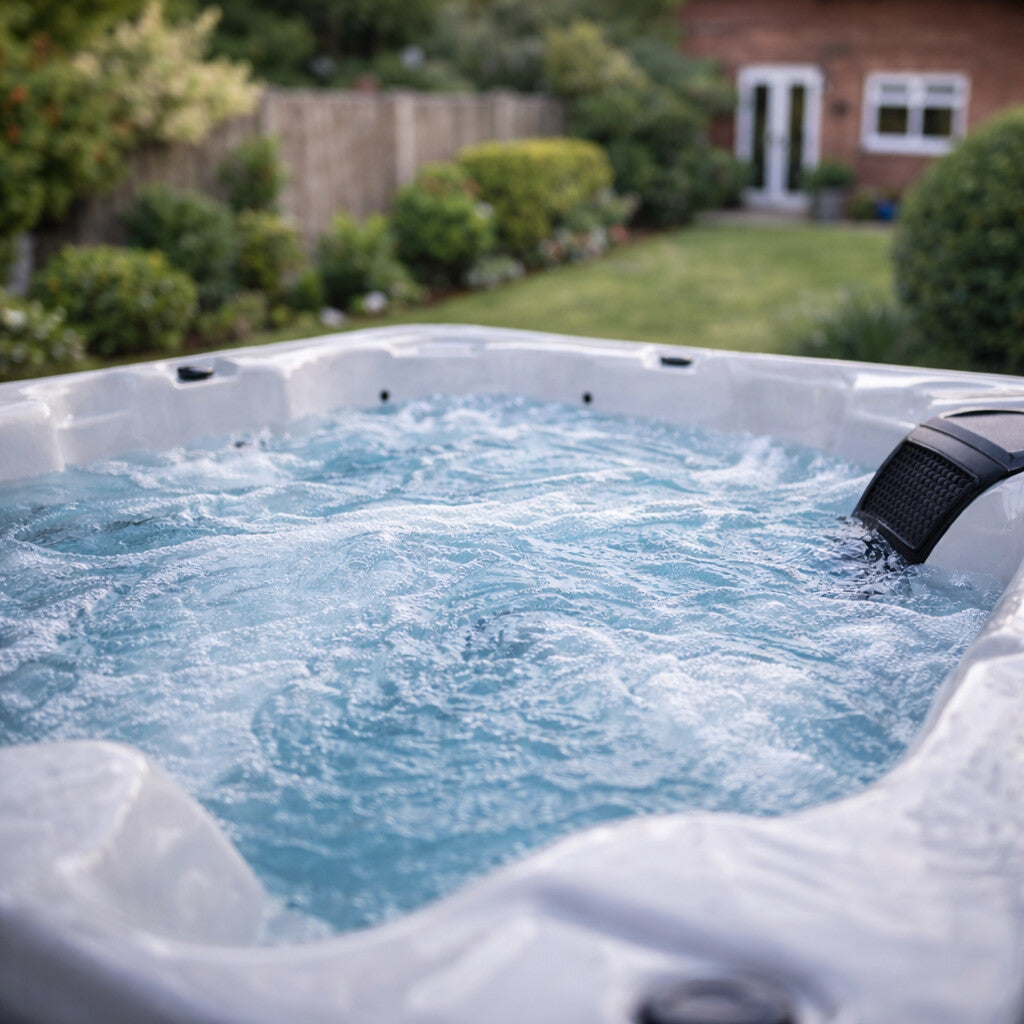
Turn on the jets and a few bubbles are normal. They should spread out and vanish quickly. Thick foam that piles up, hangs around or leaves a grubby line is different. It usually means something has built up in the water.
That may sound grim, but it is a common hot tub problem and it is often simple to sort. The trick is to find the cause instead of hiding the foam for one evening.
If you are new to hot tub ownership, this guide will help you work through the likely causes in a safe order. You will also learn when a quick fix is enough and when fresh water is the sensible answer.
Why is my hot tub foaming when the jets come on?
Hot tub jets mix air into the water. If the water contains soap, oils or other dissolved residue, that rush of air can turn it into stable foam.
Think of washing-up liquid under a running tap. The tap does not create the soap. It only stirs it into bubbles. Hot tub jets can do much the same with residue that is already in the water.
A light layer of large bubbles that clears as soon as the jets stop is usually nothing to worry about. Foam that looks creamy, builds into peaks or stays on the surface needs attention.
What is the foam telling you?
Foam is a clue, not a full diagnosis. It may point to one main cause or a mix of smaller issues.
Common culprits include detergent in swimwear, body products, dirty filters and older water. Water balance may play a part too. That is why reaching straight for a foam remover can miss the real problem.

The most common causes of hot tub foam
1. Detergent left in swimwear
This is one of the easiest ways for soap to reach the water. A swimming costume may look clean but still hold washing powder, liquid detergent or fabric conditioner in its fibres.
Once the jets run, that small amount of residue can produce a surprising amount of foam. Rinse hot tub swimwear in clean water after use and keep it separate from the normal wash where you can.
2. Body oils, cosmetics and hair products
Every bather brings a little organic matter into the tub. Sweat, natural skin oils, deodorant, fake tan, moisturiser, make-up and hair products all add to the load.
The effect builds over time. A quick shower before bathing can make a real difference, especially when the tub gets frequent use or several people use it at once.
3. A dirty or overloaded filter
The filter catches particles as water circulates. Oils and grease can also settle deep in its pleats. If the filter is clogged or overdue a proper clean, it cannot support clear water as well as it should.
Rinsing removes loose debris. A specialist filter cleaner deals with the oils that water alone may leave behind. Always follow the filter and cleaning-product instructions, and never use household washing-up liquid or laundry detergent on a spa filter.
Our guide to cleaning your hot tub covers the wider routine around the shell, cover and filters.
4. Older water and dissolved residue
Hot tub water is reused and treated many times. Each bathing session and each dose of water-care product leaves a small amount of dissolved material behind. This is often described as total dissolved solids, or TDS.
Filters cannot remove everything that dissolves in the water. When the build-up becomes too high, the water may feel dull, look tired or foam when it is aerated. A water change is the only way to remove that dissolved load fully.
How soon this happens depends on the size of the tub, how often it is used, how many people bathe and how well the water is maintained. Follow your hot tub maker's water-change guidance rather than relying on one fixed timetable.
5. Water that is out of balance
Poor water balance can make other foam-causing residue more noticeable. Test total alkalinity, pH and sanitiser before adding more products.
Use the target range in your hot tub manual and on the treatment label. Source water and treatment systems vary, so a number copied from a different tub is not always the right answer for yours.
The H2O hot tub water care guide explains the role of each part of the routine. If the readings do not make sense, ask a water-care specialist before adding several corrective products at once.

How to get rid of foam in a hot tub
Work through these steps in order. Changing several things at once makes it harder to learn what caused the problem.
Step 1: Stop bathing and inspect the water
Keep people out while you check it. Look for persistent foam, cloudiness, a strong smell, a greasy waterline or any colour that seems wrong.
If the water looks or smells poor, do not treat the foam as a cosmetic issue. Clear, correctly treated water comes first.
Step 2: Test before you dose
Use an in-date test strip or your usual test kit. Check total alkalinity, pH and sanitiser, then compare the result with the instructions for your tub and treatment system.
Correct one reading at a time. Measure products carefully and let the water circulate as directed before testing again. Never mix neat chemicals, and never switch between chlorine and bromine without suitable advice.
For a simple refresher, read our guide to hot tub water care.
Step 3: Remove the obvious residue
Skim off surface foam if you can. Wipe the waterline with a cleaner made for hot tub shells. If a fragranced product or household cleaner has entered the tub, stop using it.
Do not add washing-up liquid, household spray or bathroom cleaner. Even a small amount can create more foam and may not be suitable for the spa surface or water system.
Step 4: Check and clean the filter
Turn off the tub as the manual directs before removing the filter. Rinse between the pleats with a garden hose. Do not use a pressure washer because it can damage the filter material.
If the filter is oily, overdue a deep clean or no longer comes clean, follow the maker's instructions for specialist cleaning or replacement. Rinse all filter cleaner away before the filter goes back into service.
Step 5: Oxidise the water if the routine calls for it
Shock treatment can help break down organic waste that the sanitiser and filter have not dealt with. It is not a guess-and-pour fix.
Use the right shock product for your water-care system, follow the label and keep the cover open for the period stated by the maker. Do not bathe until the product instructions say the water is ready and your readings are back in the correct range.
Our article on how to shock a hot tub explains the process in more detail.
Step 6: Drain and refill if the foam returns
If the water is old, heavily contaminated or still foams after the checks above, a drain and refill is usually more useful than adding another product.
Follow your manual for draining, cleaning and refilling. Use a suitable plumbing cleaner if the maker recommends one. Refill, balance and sanitise the water before anyone gets back in.
If fresh water foams straight away, check for cleaner left in the pipework, detergent on swimwear or an issue with the source water. A dealer or water-care specialist can help you test the next step without guesswork.

Does hot tub foam remover solve the problem?
A spa foam remover can knock down visible foam quickly. That can be useful as a short-term treatment when the water has been tested and the underlying care routine is sound.
It does not remove the source of the foam. If detergent, oils or dissolved residue remain in the water, the foam is likely to return. Repeated doses can also add more material to water that may already be overloaded.
Use only a product made for hot tubs and follow its label. Treat it as a temporary tool, not a replacement for testing, filter care or a water change.
Can you use a hot tub when the water is foamy?
Do not get in until you have checked the water. Foam itself can be caused by everyday residue, but it can sit alongside low sanitiser, poor balance, cloudiness or an overdue water change.
Keep the tub closed if:
- you cannot see the footwell clearly
- the water has an unusual colour or strong smell
- sanitiser or pH is outside the range for your system
- you suspect household cleaner or another unknown product has entered the water
- anyone has had sickness or diarrhoea and used the tub
When the cause is unknown, fresh water and a clean system are safer than a hopeful extra dose of chemicals. If the problem remains after a drain and refill, stop using the tub and speak to your dealer or a trained water-care professional.
How to prevent hot tub foam
The best fix is to stop soap and oils reaching the water in the first place.
Shower before you get in
A quick rinse removes much of the deodorant, make-up, fake tan, moisturiser and sweat that would otherwise enter the tub.
Keep hot tub swimwear simple
Rinse costumes in clean water after use. If they need a full wash, rinse them very well and avoid fabric conditioner. Keeping one set just for the hot tub can help.
Stay on top of filters and water tests
Rinse and clean filters as the maker directs. Test before bathing and correct readings with the right product for your system. A steady routine is easier than rescuing neglected water.
Use only spa-safe products
Choose scents, cleaners and treatments that are made for hot tubs and compatible with your water-care system. More product is not better. Use the measured dose on the label.
Change the water when the tub needs it
Heavy use shortens the useful life of the water. If it is becoming hard to balance, feels dull or keeps foaming, a planned water change can save time and chemicals.
Hot tub foam questions
Why does my hot tub only foam with the jets on?
The jets mix air into water that contains foam-forming residue. Without that agitation, the residue may be hard to see. When the jets run, stable bubbles gather on the surface.
Will chlorine get rid of hot tub foam?
Not by itself. Correct sanitiser is vital for hygienic water, but extra chlorine is not a general foam cure. Test first, then follow the treatment label and your hot tub manual. Organic build-up may call for the correct shock treatment, while old water may need to be replaced.
Why is a freshly filled hot tub foaming?
Look for residue from a plumbing cleaner, household product or detergent in swimwear. Test the new water and check the start-up steps in your manual. If the readings are correct and the foam persists, ask your dealer about the source water before adding more chemicals.
Can a dirty filter cause hot tub foam?
It can contribute. A filter loaded with grease and debris cannot support clear water as well as a clean one. Rinse it, deep-clean it with a specialist product when due and replace it when the maker recommends.
Why is my hot tub foaming? The simple answer
Persistent hot tub foam usually means the jets are revealing soap, body products or dissolved residue in the water. A dirty filter, ageing water or poor balance can make the problem worse.
Test first, clean the filter, remove the source and treat the water only as directed. If the foam comes back, drain and refill instead of masking it. A quick pre-soak shower and a steady water-care routine will help keep it from returning.


Share: