

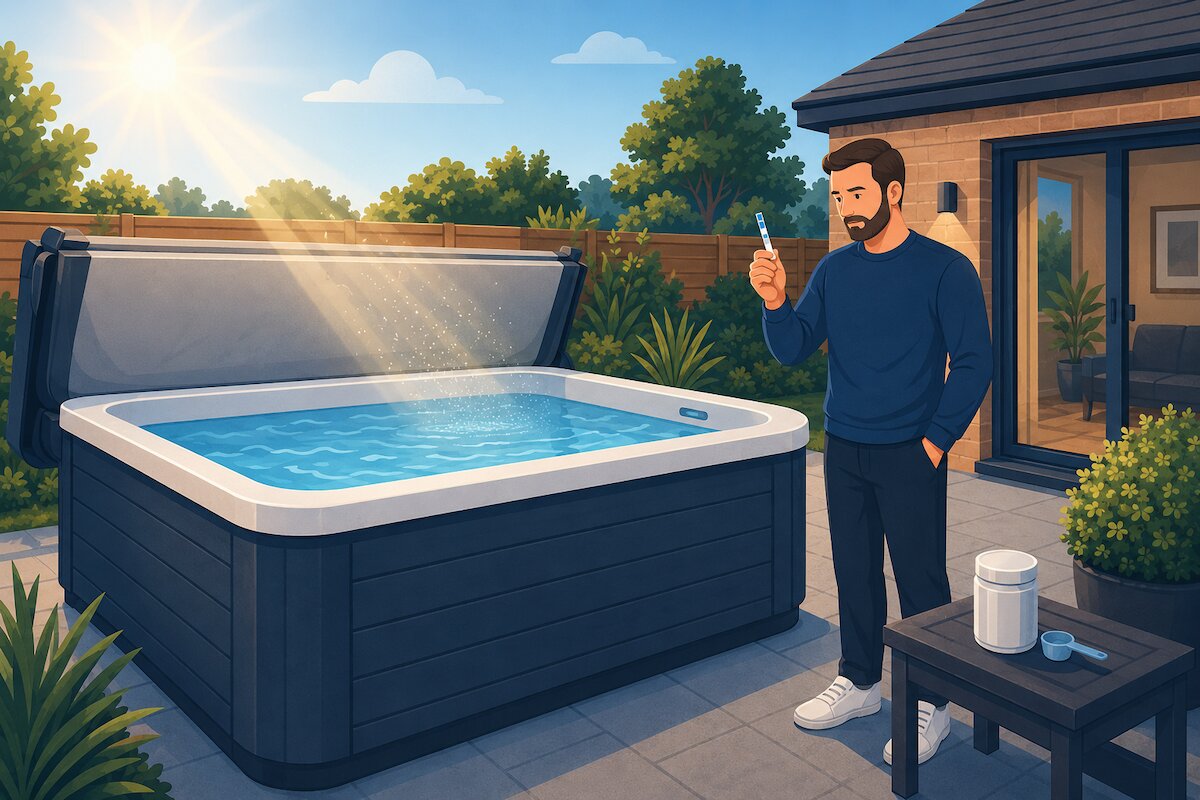
You test the water, add the correct dose of chlorine and get a sensible reading. Then you test again later and it has almost vanished. It can feel as though the hot tub is drinking chlorine.
Usually, the chlorine is not disappearing for no reason. It is reacting with something, escaping faster than usual or being measured in a way that gives a misleading result. Regular use, body products, dirty filters, older water, hot sunshine and an open cover can all raise the amount you need.
There is one useful twist here. The same sunlight that wastes chlorine when your level is correct can help bring it down when you have accidentally added too much. The difference is whether the loss is planned and controlled.
What does "using too much chlorine" actually mean?
Owners often use this phrase for two different problems:
- The chlorine level keeps dropping: you add chlorine, but the next test is low. This points towards high chlorine demand, sunlight, heat, water quality or a testing issue.
- The chlorine level is too high: the reading stays above the range on your product or hot tub instructions. This often follows an oversized dose, a recent chlorine shock or a dispenser set too high.
Those problems need opposite actions, so confirm which one you have before adding anything else. If you are still deciding which sanitiser suits your routine, our guide to chlorine and bromine for hot tubs explains the main differences.
What is chlorine demand?
Chlorine demand is the amount of chlorine used while it reacts with contaminants in the water. Sweat, body oils, cosmetics, detergent, leaves and microorganisms all give it work to do. The more work there is, the less free chlorine remains for the next test.
That does not mean the chlorine has failed. In many cases, it means the chlorine has been busy.
Free chlorine, total chlorine and that strong smell
Free chlorine is the part available to sanitise the water. Total chlorine includes both free chlorine and chlorine that has already combined with contaminants.
A strong "chlorine" smell does not always mean there is too much useful chlorine. It can come from chloramines, which form when chlorine reacts with contamination. Water can smell strongly chlorinated while the free-chlorine reading is low. Test the water rather than relying on your nose.
Why is your hot tub using so much chlorine?
1. You use the hot tub regularly
Every bather adds a little to the water. Even clean skin carries sweat, natural oils and microorganisms. A long family soak or a weekend with friends creates far more chlorine demand than one person using the tub for a short dip.
This is normal. A hot tub is a small volume of warm water, so a few bathers have a much bigger effect than they would in a swimming pool. Test more often during busy periods and follow the product label for any after-use dose.
2. Sun cream, fake tan and other body products are entering the water
Sun cream is an obvious summer culprit, but it is not alone. Moisturiser, deodorant, make-up, hair products, perfume and fake tan all enter the water from our skin. Chlorine then reacts with that extra organic material.
A quick shower before bathing can make a noticeable difference. It also helps reduce foam and the oily line that sometimes forms around the shell. Swimwear can add detergent too, especially if it has just come out of a normal wash cycle.
3. The cover is being left off in bright sunlight
Ultraviolet light from the sun breaks down free chlorine. If the lid is left open for hours on a bright day, the chlorine level can fall even when nobody uses the tub. Hot sunshine, an open cover and vigorous jets can make the loss faster.
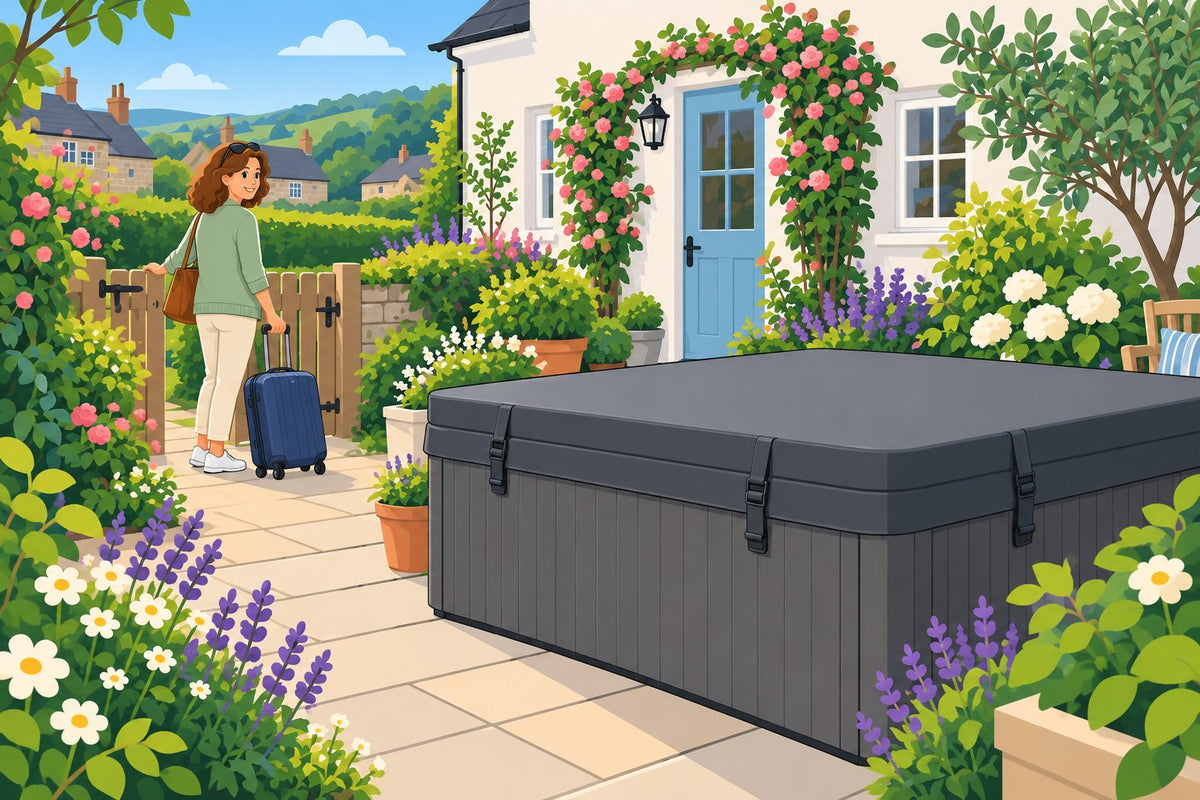
Keep the cover closed and secured when the hot tub is not in use, apart from the ventilation time required by your water-care product. This protects the water from sunlight and also keeps out leaves, pollen and other debris that would create more chlorine demand.
4. Warm water and aeration speed things up
Hot tubs run much warmer than swimming pools. Warm water speeds chemical reactions, while jets and air blowers expose more water to the air. Chlorine will not usually last as long in a hot, bubbling spa as it does in a cooler pool.
That is part of hot tub ownership, not a fault. Problems start when air controls are left open outside bathing sessions, water features run for long periods or the cover stays off without a reason.
5. The pH is outside its working range
Chlorine and pH work together. When pH is too high, chlorine becomes less effective as a disinfectant. Owners may then keep adding more because the water still looks dull or the reading seems hard to maintain.
BISHTA recommends keeping domestic hot tub pH between 7.0 and 7.6 and chlorine within the range suitable for the treatment system. Your product label and hot tub instructions come first because systems differ. Our hot tub water care guide explains how pH, alkalinity and sanitiser fit together.
6. The filter is dirty or circulation is poor
A filter traps debris, oils and particles. If it is overloaded, that trapped material remains in contact with the water and keeps adding to the sanitiser's workload. Poor circulation can also leave parts of the hot tub with less effective treatment.
Remove and rinse the filter as your manual directs. Use a proper filter-cleaning product when a deeper clean is due, then rinse it thoroughly before refitting it. Never use washing-up liquid or household detergent on a hot tub filter.
7. The water is old or carrying a hidden build-up
Every dose, soak and top-up leaves dissolved material behind. Filters remove particles, but they cannot remove everything dissolved in the water. As that build-up grows, water can become harder to balance and chlorine may seem to disappear faster.
A drain, clean and refill can be more sensible than adding one chemical after another. If chlorine drops rapidly in freshly filled water despite correct balance and light use, ask your retailer about a plumbing purge or service check. Biofilm or contamination inside the circulation system needs a proper remedy, not endless chlorine.
8. The test result or dose is misleading you
Test strips and tablets have expiry dates. Damp storage, old reagents, incorrect dipping time and reading the colour too late can all give poor results. Very high chlorine can also overwhelm some tests and appear lower than it really is.
Check the expiry date, use dry hands and follow the test instructions exactly. If the result makes no sense after a recent dose, confirm it with a fresh test kit before adding more.
Dosing errors are common too. Check the hot tub's true water capacity, not its outside dimensions, and use the measuring method on the chemical label. A scoop from another product may hold a different amount.

How to find out where the chlorine is going
Random dosing makes the pattern harder to see. A short, consistent check is more useful.
- Start with a reliable test. Check free chlorine and pH using an in-date kit.
- Record recent use. Note how many people used the tub, how long they stayed in and whether anyone wore sun cream or other products.
- Check the cover. Make sure it fits well and has not been left open in direct sunlight.
- Inspect the filter. Rinse or clean it if due, following the manual.
- Use a measured dose. Base it on the actual water capacity and product directions.
- Retest at the interval stated by the product. Keep the cover and circulation settings consistent so the comparison means something.
If the level holds when the hot tub is covered and unused but falls after bathing, bather load is the likely cause. If it falls rapidly while covered and unused, look more closely at water age, filtration, balance, the test method and possible contamination.
How to reduce chlorine usage without compromising water safety
The goal is not to use as little chlorine as possible. The goal is to maintain the correct free-chlorine level with less contamination for it to process.
- Ask bathers to shower before getting in.
- Rinse hot tub swimwear in clean water rather than washing it with a heavy detergent dose after every use.
- Keep sun cream, fake tan and body lotions out of the water where practical.
- Close and secure the cover when the tub is not being used.
- Clean the filters on the schedule in your manual.
- Test pH and sanitiser before use and after busy bathing periods.
- Measure chemicals carefully rather than topping up by eye.
- Change the water when it becomes difficult to balance.
Shock treatment can help oxidise organic contamination, but it should follow the product directions and your normal care routine. It is not a substitute for cleaning filters or changing tired water. See our guide to shocking a hot tub for a fuller explanation.
What should you do if the chlorine level is too high?
Don't use the hot tub while the reading is above the range stated by the chemical product or your hot tub instructions. High chlorine can irritate skin and eyes and, if it remains high, may shorten the life of covers, headrests and other components.
Stop adding chlorine
Remove any floating dispenser if your system uses one, or turn down an automatic feeder as its instructions allow. Don't add another chemical simply because the first test looks unusual. Confirm the reading with an in-date kit.
Open the cover and let sunlight help
Leaving the lid open in daylight allows chlorine to break down naturally. A bright, sunny day speeds that process because ultraviolet light acts on the free chlorine. Run normal circulation if your instructions allow, then retest before anyone gets in.
Keep the open hot tub supervised and inaccessible to children and pets. Don't leave an empty or partly empty acrylic shell exposed to strong sun, and follow the maker's guidance for cover-off circulation.
Dilute the water if you need a faster reduction
If the level remains too high, drain some water and replace it with fresh water. Replacing half the water can make a large difference, but you may need less depending on the reading. Follow the hot tub's draining instructions and don't discharge treated water into a surface-water drain, stream or pond.
Circulate the refilled water, then retest chlorine, pH and alkalinity. Fresh water changes more than the sanitiser reading, so rebalance it before bathing.
Use a chlorine neutraliser only with care
A spa-safe neutraliser can reduce chlorine quickly, but a small dosing error may remove too much and leave the water without enough sanitiser. Use one only when it is suitable for your system and measure it exactly as the label directs. If you are unsure, ask your retailer first.
Our dedicated guide to lowering chlorine or bromine levels in a hot tub covers these options in more detail.

Hot tub chlorine questions
How often should chlorine be added?
There is no single schedule that suits every hot tub. Water volume, temperature, bather load, treatment system and product strength all matter. Test before use, follow the label and adjust your routine when the tub has been used more heavily than normal.
Why does chlorine disappear overnight?
A large overnight drop can follow a busy soak, a shock treatment reacting with contamination, a dirty filter or old water. If the covered tub was unused, confirm the test, check pH and inspect the filter. A repeated rapid loss may need a deeper clean or professional advice.
Should the hot tub lid be left open after adding chlorine?
Many products require a period of circulation with the cover open, especially after shock treatment, but the timing varies. Follow the chemical label and hot tub manual. Leaving the cover open for hours after the required period wastes chlorine and lets debris into the water.
Can too much chlorine damage a hot tub?
A brief high reading can usually be corrected, but repeated overdosing may fade surfaces and swimwear, affect soft components and irritate bathers. Never enter until the water has returned to the correct range.
Why is my hot tub using so much chlorine? The short answer
Chlorine gets used fastest when the hot tub is busy, the water carries body products or detergent, the filter is dirty, the pH is wrong, the water is old or the uncovered surface sits in bright sunlight. Start with a reliable test, then look for the cause before adding another dose.
Keep the cover closed when the level is correct. If the level is too high, the opposite can help: stop dosing, open the cover in safe daylight, circulate and retest. Dilute with fresh water if needed, then check the full water balance before bathing.
Good water care should feel predictable. If your readings still swing despite measured dosing and clean filters, H2O Hot Tubs can help you work out the next sensible step.
Share: