

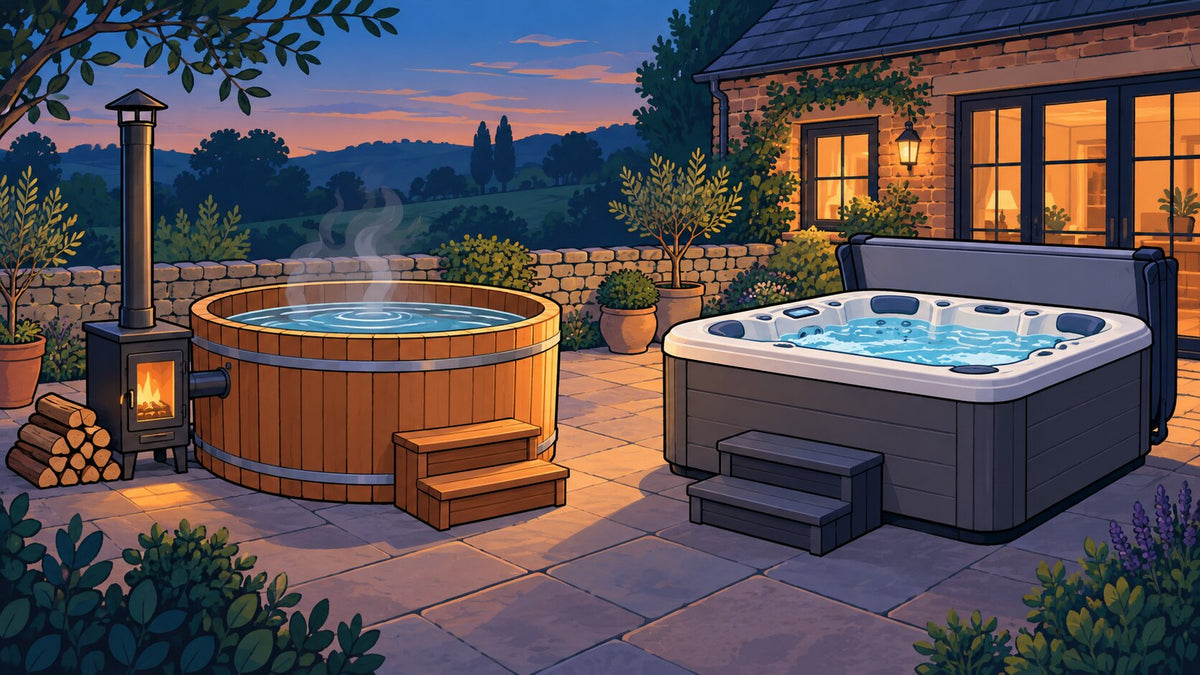
Wood-fired vs electric hot tubs: which suits your home?
A wood-fired hot tub has an obvious appeal: real timber, a crackling stove and a slower, more hands-on soak. An electric hot tub offers a different kind of comfort. Set the temperature, let the system circulate and filter the water, and it can be ready when you are.
Neither is right for everyone. Your choice depends on whether you want the ritual of a fire or the convenience of regular use, and how much jets, filtration and temperature control matter. Here’s how ownership differs.
Quick comparison: wood-fired vs electric hot tubs
| Feature | Wood-fired hot tub | Electric hot tub |
|---|---|---|
| Heat source | Wood stove warms the water directly or through a circulation path. | Electric heater warms water as the system circulates it. |
| Heating and readiness | Light and manage the fire; heat-up time depends on the tub, stove, wood and weather. | Usually kept near a chosen temperature, so it can be ready for a planned or spontaneous soak. |
| Temperature control | Manual; the user monitors and adjusts the fire and water. | Thermostat and control system maintain the set temperature. |
| Jets | Traditional simple tubs are often soaking tubs; some upgraded systems add jets. | Jets and massage seating are common features, depending on the model. |
| Filtration | Varies: some are simple tubs, while others can be configured with a filter and pump. | Typically includes a circulation and filtration system. |
| Running costs | Depend on fuel price, water volume, heat loss and how often you heat it. | Depend on tariff, insulation, cover, temperature, size and use. |
| Everyday use | Best if you enjoy planning and tending the fire. | Usually more convenient for regular family use. |
How does a wood-fired hot tub work?
A wood-fired hot tub uses a stove to warm the bathing water. The stove may sit inside the tub or outside it, with water warmed by the stove’s hot surface or circulated through a connected heater. The exact design matters, so check how the manufacturer describes its system.
You fill the tub, light the fire and add suitable dry fuel as it burns. The water warms gradually, and you keep an eye on the fire and temperature. There is no automatic thermostat in a basic setup, so the user has to judge when the water is comfortable and manage the fire safely.
Simple wood-fired tubs can be deliberately low-tech. They may have no powered filtration, circulation pump or massage jets. Other models offer optional filtration, pumps, bubbles or hydrotherapy, so don’t assume every wood-fired tub has the same specification. Ask what is included, how the water circulates and what needs power before you compare prices.
How does an electric hot tub work?
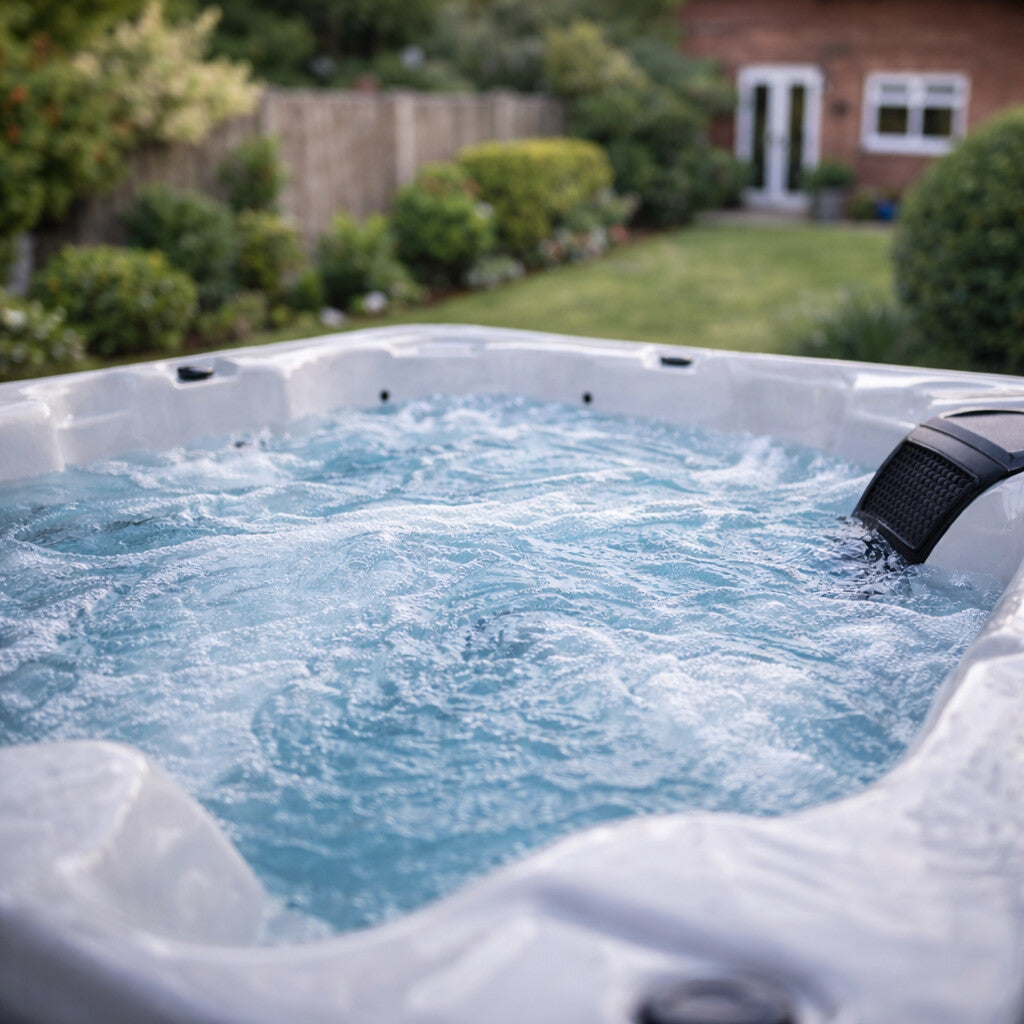
An electric hot tub uses a heater, pump or pumps, controls and usually a filtration system. You choose a target temperature on the control panel. The system circulates water through the filter and heater, then runs its programmed cycles to keep the tub close to that setting.
Many electric spas also have separate jet pumps for massage, plus shaped seats, diverters and controls that let bathers choose where the water pressure goes. Equipment differs between models, but the basic idea is simple: the hot tub manages heat and circulation for you, rather than asking you to tend a fire.
For a straightforward explanation of heaters, pumps and filtration, see our guide to how an electric hot tub works.
Heating times: which heats up faster?
There isn’t one heating time for every tub. A wood-fired model may warm a smaller volume quickly with a powerful stove and a well-managed fire. A larger tub, cold fill water, damp fuel, wind and low outdoor temperatures can extend the wait. Ask for an estimate that states the tub capacity, starting water temperature and test conditions.
An electric hot tub usually heats more predictably. Its rate depends on heater output, water volume, insulation and weather. A 13A model may also manage heating and high-speed jets differently from a 32A model, so check the exact specification.
The bigger difference is often readiness, not the fastest cold-start figure. Electric spas are commonly kept near the preferred temperature under an insulated cover. A wood-fired tub usually needs the fire lit before use. If you want to decide at 7pm to have a soak, electric is usually simpler.
For electrical supply choices, our 13A vs 32A hot tub guide explains the practical differences. Electrical installation should always follow the spa instructions and be handled by a qualified professional where required.
Do wood-fired hot tubs have jets?
Some do, but a traditional wood-fired tub is often designed for soaking rather than powered massage. A basic model may have bench seating and no jets at all. Upgraded or hybrid wood-fired tubs can be fitted with pumps, air or hydro jets and filtration, but those features add equipment and may need an electrical supply.
Electric hot tubs are the more natural choice if massage is high on your list. They are designed around jet layouts, shaped seats and controls for directing water flow. Compare the seat experience in person if you can: a long list of jets doesn’t tell you whether the pressure and seating feel right for your body.
Running costs: wood vs electricity
It’s not accurate to say that wood is always cheaper or that electricity always costs less. A wood-fired tub uses logs or another approved fuel, and the cost per session depends on how much fuel it takes to heat the water, what you pay for dry wood and how much warmth escapes before you get in. If you have an inexpensive supply of suitable logs, that can change the calculation.
An electric spa’s energy use depends on the local electricity tariff, water volume, insulation, cover condition, target temperature, exposure to wind and frequency of use. For a like-for-like estimate, ask for measured or independently tested energy data for the exact model and conditions. Compare a full season of your expected use, not one heat-up against one week of standby.
Regular use changes the comparison. An electric tub can maintain temperature under its cover, while a wood-fired tub may be heated from cooler water for each session. But maintaining heat also uses energy, and an inefficient cover or exposed position can increase loss. The UK hot tub running-cost guide explains the main variables and ways to reduce avoidable heat loss.
Whichever you choose, check the quality and fit of the cover, how well the shell and cabinet are insulated, and what happens when the tub is not in use. A realistic cost comparison starts with the whole setup and your habits, not the fuel source alone.
Everyday use and convenience
Wood-fired ownership is an activity in its own right. You need dry fuel stored nearby, time to light and tend the fire, and a safe place for the stove and flue. Smoke and wind direction may matter in a compact garden or near neighbouring windows. For a cabin, rural retreat or occasional long soak, that ritual can be exactly the point. It feels closer to an outdoor bathing tradition than to pressing a button.
For most households that want to use a hot tub several times a week, an electric model is easier to live with. You can set the temperature, rely on programmed circulation and filtration, and use it without first preparing a fire. It’s also easier to fit into family routines when different people want a quick soak at different times.
This does not make electric maintenance-free. You still need to test and balance the water, clean the filter and look after the cover. But the controls and filtration take on some routine tasks that a simple wood-fired setup may leave to the owner.

Water care and maintenance
Both types need clean, treated water. Test it, use an approved sanitiser and follow the manufacturer’s instructions. Our beginner’s water-care guide explains the basics, and BISHTA’s maintenance guidance outlines the regular checks.
An electric hot tub’s circulation pump and cartridge filter help remove suspended debris, but filtration does not replace sanitiser or water testing. Check how often the model filters, how the filter is cleaned and whether the circulation runs automatically.
Wood-fired tubs vary more. Some include a pump and filter; others use a simpler arrangement that calls for more hands-on water management. Ask how long water can be kept in the tub, what sanitising method is approved, and how to clean or drain it. A basic tub isn’t automatically unhygienic, but the work can be more manual if filtration is absent.
Comfort, seating and massage
Many wood-fired tubs prioritise a shared soak, with a round shape and bench-style seating. That can be sociable and simple, but it may offer less support or variation than a modern spa. If you want moulded seats, different depths, a lounger or adjustable massage zones, check the actual layout rather than relying on a headline capacity.
Electric hot tubs tend to offer more choice in seating and hydrotherapy. You can compare upright seats, loungers and jet placements, and some models let you adjust the flow between seats. That makes them a better match for buyers seeking a spa-like massage experience. The right choice still depends on your body size, preferred sitting position and who will use it.
Installation and practical requirements
Both types need a stable, level base that can support the filled tub and its occupants. Check delivery access, drainage, service space and the manufacturer’s siting rules before you commit.
A wood-fired tub needs a safe stove position, suitable flue route and manufacturer clearances. Consider smoke, nearby structures, fuel storage and neighbours. An electric tub needs a supply installed to the manufacturer’s requirements. Some models use 13A; others need a dedicated 32A circuit. Confirm the requirement with the retailer and a qualified electrician before ordering.
Which type of hot tub is best for you?
Think about the experience you want on an ordinary Tuesday, not only the first time you light the stove or switch on the jets.
- Choose wood-fired if you want a rustic, natural soak, enjoy lighting and managing a fire, have access to suitable dry logs and don’t mind planning ahead. It can suit cabins, off-grid settings and people who value the process as much as the soak.
- Choose electric if you want jets and massage, straightforward temperature control, built-in filtration and a tub that is easier to use regularly. It’s usually the more convenient option for families and homeowners who want short-notice evening use.

Wood-fired vs electric hot tubs: our verdict
Wood-fired hot tubs have real charm. Choose one if you specifically want an off-grid or rustic bathing experience and are happy to light, heat and manage the water manually.
For most UK homes, an electric hot tub is the more practical choice for regular use. It offers simpler temperature control, easier access to jets and massage, and usually a more automated approach to circulation and filtration. That convenience matters when you want the hot tub ready more often, with less preparation.
If you’re leaning towards electric, explore H2O Hot Tubs or visit our Nottinghamshire showroom to compare seating and massage in person. Tell the team how often you’ll use it, who will be bathing and what your garden can accommodate, and they can help you weigh up the options without guesswork.
Frequently asked questions
Are wood-fired hot tubs cheaper to run than electric hot tubs?
Sometimes, if suitable logs are inexpensive, but there’s no universal answer. Compare fuel or electricity prices, water volume, heat loss and how often you use the tub. The Energy Saving Trust also highlights size, insulation, exposure and set temperature as cost factors.
How long does a wood-fired hot tub take to heat?
It depends on capacity, stove design, starting water temperature, wood, wind and weather. Ask the maker for a cold-fill estimate for the exact model.
Do wood-fired hot tubs have bubbles or jets?
Some upgraded models do, but many traditional tubs are simple soaking tubs. Check whether the pump, jets and filtration are included or optional, and whether they need electricity.
Can you use a wood-fired hot tub all year round?
Many are designed for outdoor use year-round. Follow the maker’s cold-weather, water-care and operating instructions; heating time and fuel use may change in winter.
Are electric hot tubs easier to maintain?
They often automate circulation, filtration and temperature control, which can make routine ownership easier. You still need to test the water, clean the filter and follow the maintenance schedule.
Which is better for families?
An electric tub is usually more convenient for regular family use because it can be ready without lighting a fire. Check the seating, safe access, supervision needs and the manufacturer’s guidance on children.
Can a wood-fired hot tub stay hot overnight?
A well-insulated tub and cover may retain warmth, depending on weather. A basic wood-fired system has no automatic thermostat. Never leave a fire unattended; follow the stove maker’s instructions.
Is a wood-fired hot tub better for off-grid use?
It can be a good fit where there is no convenient mains supply, provided the chosen tub’s pump, filtration or other accessories do not require electricity. Confirm the complete system requirements before buying.

Share: