

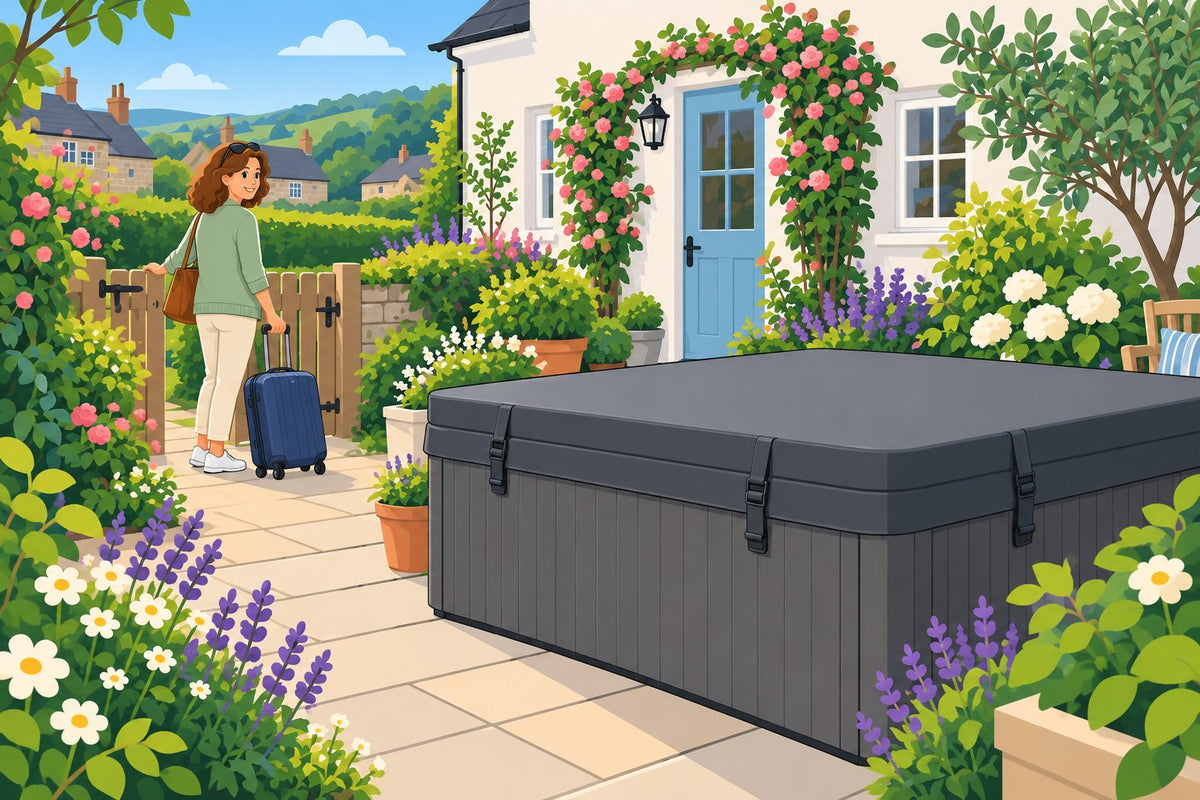
Your bags are packed, the fridge is cleared and someone has agreed to water the plants. But what happens to the hot tub while you're away?
For a short trip, many hard-shell electric spas can stay filled and running. They still need a water-care plan. For a longer absence, especially with freezing weather possible, a properly managed shutdown may make more sense. The right choice depends on your spa, treatment system, trip length and who can check it.
This guide is for a private household hot tub with no bathers while you're away. A spa used by paying guests needs a separate operating plan.
Should you leave your hot tub on when you go on holiday?
Usually, keep a suitable electric hot tub powered during a short absence so its normal circulation, filtration and heating controls can work. Follow its manual. Don't switch off a filled spa and assume the cover will keep the water in good condition.
Power and water care do different jobs. A running pump moves water. A filter catches particles. Neither guarantees a suitable sanitiser level. Even without bathers, the water needs checking and treatment according to your usual approved routine.
Our guide to leaving a hot tub on explains the general operating choice. Being away adds another question: who will notice and deal with a problem?
| Situation | Practical starting point |
|---|---|
| Short break, healthy water and someone able to check it | Keep normal approved operation, secure the cover and agree water-care checks. |
| Longer holiday with a trained helper | Agree a written care plan with your supplier for your exact spa and treatment system. |
| No one can check a filled spa | Ask your supplier about professional checks or a proper shutdown before leaving. |
| Extended absence with frost possible | Arrange monitored operation or professional winterisation. Simply draining the shell isn't enough. |
Make the plan before departure day
A long holiday isn't the time to discover that your neighbour has never tested spa water. Start with the owner's manual and ask your supplier how to manage your particular system while you're away.
Tell them how long you'll be away, whether anyone can visit, which sanitiser you use and whether freezing conditions are possible. Mention any recent leaks, unexplained chemical demand or error messages. Resolve those faults first.
There's no universal number of days that every hot tub can be left unattended. A familiar, stable water-care routine gives useful information, but it doesn't promise that tomorrow's reading will be the same.
A weekend away
Check that your normal testing and dosing schedule is covered. If it calls for a check while you're away, arrange it. A shorter trip reduces the time for a fault to go unnoticed, but it doesn't suspend the care instructions.
A week or longer
Arrange a capable helper or a spa-care visit. Longer absences mean more chances for the sanitiser to fall, the water level to drop or a power fault to occur. Leave clear instructions and a contact number, rather than a vague request to look in occasionally.
Several weeks or a seasonal absence
Compare the cost and practicality of ongoing care with a proper shutdown and restart. Discuss winterisation if there's any risk of frost. Make that decision early enough to book help and prepare the spa correctly.
Your pre-holiday hot tub checklist
Check the water is worth keeping
Look for recurring cloudiness, an unusual smell, persistent foam or water that's difficult to balance. Don't hand those problems over with instructions to add more chemicals. Diagnose them before departure.
If the water is due for replacement, use our water-change guide. Allow time to refill, restart, balance and confirm that everything runs properly. A last-minute refill can leave an airlock or an unsettled treatment routine just as you leave.
Test, balance and record
Test the parameters required by your spa and treatment system, including sanitiser and pH. Correct readings using the approved products and label instructions. Record the date, results and any treatment so your helper has a starting point.
Don't add an extra-large dose to last the whole holiday. Too much chemical can cause its own problems, and a high reading today doesn't prove there will be enough sanitiser next week. If shock treatment is due, follow the product instructions and the spa's requirements for circulation and cover handling.
Clean and refit the filter
A clean cartridge helps water circulate as intended. Use our filter-cleaning guide, then make sure the filter is correctly fitted and the spa has returned to normal operation. Don't leave it running without the required filter.
Check the level, controls and cover
Bring the water to the level shown in the manual. Check for visible leaks, warning messages or odd pump behaviour. Confirm the intended heating and filtration settings before closing the lid.
Inspect cover straps, locks and the fit around the rim. Secure the cover and garden access. A locked cover adds protection, but it isn't a reason to allow unsupervised access or treat the lid as a platform.

Temperature and holiday modes: use the manual
Reducing the set temperature can reduce heat loss while no one is bathing. The useful setting depends on the weather, insulation, controls and how quickly you want the spa ready after returning.
Don't copy a temperature from another brand's guide. Nor should you select a mode called economy, sleep or holiday without checking what it does. Some systems heat only during certain filtration periods. Others have different operating rules.
Keep the circulation and frost-protection functions required by the manufacturer. Ask your supplier if you're unsure how a setting affects them. Savings vary, and reheating on return also uses electricity. Our running-cost guide explains the main variables.
A lower temperature doesn't remove the need for sanitiser or testing. Water can look clear while its treatment is unsuitable.
Give your helper a clear handover
Show them the routine before you travel. Agree visit frequency using your supplier's advice and treatment instructions, rather than guessing. Someone willing to lift the cover isn't automatically ready to manage chemicals.
Leave the spa manual, labelled products in their original containers, a suitable test kit and written instructions. Keep chemicals safely stored, away from children, pets and incompatible products. Never ask a helper to mix chemicals or improvise a dose.
- Record readings and check the water level at each agreed visit.
- Check that the controls show normal operation and the cover is secure.
- Use only the agreed treatment, following its label and your written plan.
- Contact you and the supplier if readings won't correct, the water turns cloudy or an error appears.
- Leave electrical faults to a qualified professional. Don't open equipment or repeatedly reset a tripping supply.
Make clear that nobody should bathe during your absence. Your care plan is for an unused household spa, not an extra set of guests.

What if nobody can check the hot tub?
Contact your supplier before leaving. A professional maintenance visit may be possible, or a full shutdown may be more sensible. Don't leave warm, untreated water sitting under a closed lid for an extended period.
An app can help you notice certain faults if your spa supports remote monitoring. Check exactly what it reports and whether it needs your home internet connection. A temperature display doesn't test pH or sanitiser. Even an alert needs someone nearby who can respond.
Why draining isn't the same as winterising
Emptying the shell can leave water in pumps, heaters and pipework. If that water freezes, components can be damaged. Proper winterisation follows the exact spa procedure and deals with trapped water, not only the water you can see.
For a cold-weather shutdown, use a competent spa professional unless you can fully follow the manufacturer's procedure. A filled spa's frost protection also depends on a working power supply and equipment. It cannot help if the electricity has failed.
Check before your first soak home
After travelling, it's tempting to lift the lid and get straight in. Check first. Review your helper's notes, inspect the water, confirm the level and look for faults.
Test and correct the water using your normal approved process. Restore the intended operating settings and allow time for treatment and heating. Only bathe once the water meets the required readings and any product waiting time has passed.
If treatment has been missed, the water smells unpleasant or you can't establish its condition, don't judge safety by appearance. Ask your supplier whether cleaning, draining and refilling is needed. Fix any equipment fault before using the spa.
Hot tub holiday questions
Can I leave my hot tub for two weeks?
It may be possible with a suitable spa, healthy water and a planned testing and treatment routine. Two weeks isn't a universal safe unattended period. Arrange capable checks or ask your supplier about shutdown.
Will tablets keep it clean while I'm away?
Only use tablets and dispensers approved for your spa. Their presence doesn't prove a suitable sanitiser reading, and some spas prohibit certain tablet products. Testing and the manufacturer's care instructions still apply.
Should I switch it off to save electricity?
Don't switch off a filled spa for an extended absence without an approved plan. You would lose its normal circulation and heating functions. Compare monitored operation with a proper shutdown instead.
Do I need to change the water when I return?
Not automatically. It depends on water age, care records, condition and test results. Missed treatment or persistent problems may require a reset, even if the water looks clear.
What to do with your hot tub when you go on holiday
Choose a plan that covers both water care and equipment checks. Prepare early, follow your spa's manual, arrange a capable helper and test before bathing when you return. For a longer absence without checks, discuss a proper shutdown.
If you're researching hot tubs, ask us about the care routine as well as the seats and jets. A spa that suits your life should also have clear instructions for the weeks when you're away from home.
Share: