

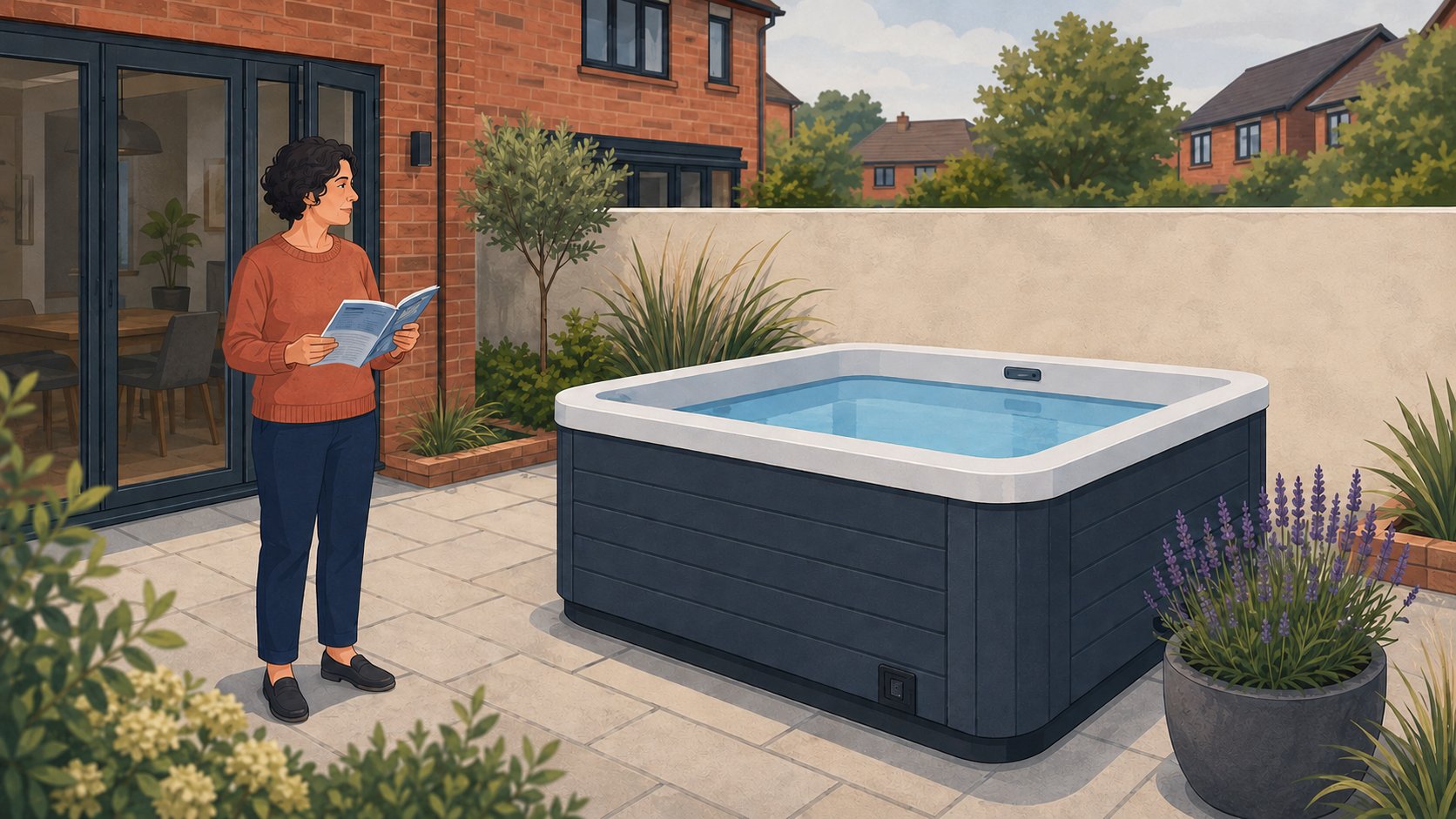
A hot tub that keeps tripping the electrics is doing more than interrupting your soak. The RCD or circuit breaker is switching the supply off because it has detected a condition it is designed to protect against.
One isolated trip can follow a brief supply disturbance. A trip that happens again, particularly at the same point in the hot tub's operating cycle, needs proper investigation. Do not keep resetting the power and hoping the problem disappears.
This guide explains what different trip patterns can mean, which checks you can make without opening electrical equipment, and when you need a qualified electrician or spa engineer.
Why does a hot tub keep tripping the electrics?
A modern hot tub uses several electrical components, including pumps, a heater, a control system and, depending on the specification, a blower, lights or an ozone unit. The installation also includes protective devices intended to disconnect the supply when something is wrong.
In everyday conversation, owners often call all of these devices a trip switch. It helps to identify what has actually operated:
- An RCD or RCBO may trip when current is leaking from the intended circuit, which can indicate an earth fault.
- An MCB or circuit breaker may trip because of excessive current, a short circuit or an unsuitable supply.
- A plug-in RCD may be fitted to the power lead of some plug-and-play spas.
- A consumer-unit device may protect the wider circuit supplying the outdoor connection.
The exact arrangement depends on the spa and the installation. Our guide to hot tub electrical requirements explains the usual difference between plug-and-play and hard-wired supplies. The model manual and the electrician's installation details remain the right references for your own setup.
Stop using the hot tub if the power trips repeatedly
Water and electricity make repeated tripping a safety issue, not a fault to work around. Keep everyone out of the hot tub, switch off the supply at the safe isolation point and arrange an inspection if the trip happens again.
Do not bypass an RCD, hold a switch in the on position, fit a larger breaker or connect the spa through an extension lead. A protective device that will not reset, will not stay on or fails its own test needs professional attention.
If you can see heat damage, exposed conductors, a cracked plug, a wet socket, smoke or scorching, do not touch the affected equipment. Keep clear, isolate the circuit only if you can do so safely, and call an electrician.
Common reasons a hot tub trips the power
Moisture has reached electrical equipment
Rain, poor drainage, a loose enclosure seal or a plumbing leak can allow moisture into a socket, isolator, control box or equipment area. The timing may offer a clue. A problem that appears after heavy rain, cleaning, a refill or a leak deserves particular caution.
Do not open an electrical enclosure to look for water. A qualified person should establish where the moisture came from, dry and test the equipment properly, and correct the cause before the spa returns to service.
The heater has developed an electrical fault
A heater element can deteriorate and allow current to leak to earth. If the hot tub powers up normally but trips when heating begins, the heater circuit is one possible cause. It is not the only cause, so the pattern is useful evidence rather than a diagnosis.
A spa engineer can isolate and test the heater safely. Owners should not disconnect components inside the control box.
A pump, blower or other component is faulty
A circulation pump may run continuously or at set intervals, while a jet pump starts when you press a control. A fault that appears as a particular component starts can point the engineer towards the affected circuit.
Pump motors, capacitors, blowers, ozone units, lights and control equipment can all fail. The task is to identify the cause through safe electrical testing, not by unplugging internal parts at random.
The cable, plug, socket or isolator is damaged
Outdoor electrical fittings must cope with weather, movement and accidental knocks. A loose connection, damaged cable, worn plug or water ingress can cause intermittent or immediate tripping.
Only inspect what is clearly visible without removing covers. Do not handle a plug or socket if it is wet or damaged. For more context on supply types, see our comparison of 13A and 32A hot tubs.
The circuit or installation is unsuitable
A hard-wired hot tub normally needs a correctly designed dedicated supply. A plug-and-play hot tub still needs a suitable outdoor connection and must not be run through an extension lead, multiway adaptor or improvised socket arrangement.
Problems that begin on installation day, after the spa has been moved or after electrical work may relate to the supply, protective device or connections. Ask the installing electrician to check the work against the manufacturer's requirements and the current wiring rules.
The protective device itself needs testing
RCDs and breakers can develop faults. An electrician can test the device and the circuit to distinguish a defective protective device from a genuine fault in the spa. Replacing a trip switch without testing the connected equipment risks missing the real problem.

What the timing of the trip can tell you
Write down what the hot tub was doing immediately before the power went off. This can shorten the diagnostic process considerably.
- It trips as soon as power is restored: the fault may be in the supply, protective device, main control equipment or a component that starts immediately.
- It trips when the heater starts: the heater or its associated circuit may need testing.
- It trips when the jets start: a jet pump, blower or component used with that function may be involved.
- It trips after rain: moisture in an outdoor fitting, cable route or equipment area becomes more likely.
- It trips after a drain and refill: check for visible leaks or overflow, but leave electrical investigation to a professional.
- It trips only from time to time: an intermittent component, moisture problem or loose connection may still be present.
A hot tub can also appear to lose power when a control protection mode or error has stopped heating or circulation. Check the display and manual before assuming the house electrics have tripped. Our article on a hot tub that is not heating explains the difference between slow heating, a water-flow problem and a power fault.
Safe checks you can make without opening the hot tub
- Keep the hot tub empty. Do not use it while an electrical fault is suspected.
- Identify the device that tripped. Note whether it is on the spa lead, at an outdoor point or in the consumer unit. Do not remove any cover.
- Read the control display. Record any message or code before isolating the supply, if it is safe to view.
- Note the timing. Write down whether heating, circulation, jets or lights had just started.
- Look from a safe distance. Check for standing water, a visible leak, damaged cabling, a cracked fitting or signs of overheating without touching the equipment.
- Think about recent changes. Tell the engineer about heavy rain, a refill, a moved spa, new garden work or recent electrical work.
- Check the owner's manual. Follow only the reset procedure stated for your model. If the device trips again, stop.
If the ground around the supply is wet, the cable or enclosure looks damaged, or you are unsure which device has operated, leave everything alone and call a qualified electrician.

What not to do when a hot tub trips the electrics
- Do not reset the RCD or breaker repeatedly.
- Do not bypass, tape or wedge a protective device.
- Do not fit a higher-rated fuse or breaker to stop it tripping.
- Do not use an extension lead or indoor adaptor.
- Do not open the control box, heater housing, socket or isolator.
- Do not disconnect internal components to test them yourself.
- Do not run the hot tub dry after draining it.
- Do not assume the water is safe because the power stays on after a reset.
Protective devices are there to reduce risk. Disabling one can turn a service problem into a serious shock or fire hazard.
Do you need an electrician or a hot tub engineer?
The right first call depends on where the evidence points.
- Call a qualified electrician for the fixed supply, consumer unit, RCD or RCBO, outdoor socket, isolator, cable route, earthing and installation checks.
- Call a competent spa engineer for the heater, pumps, control pack, sensors and other components inside the hot tub.
Some faults need both trades. The electrician can confirm that the supply and protection are correct, while the spa engineer tests the equipment connected to them. Give either person the trip pattern, any error code and details of recent weather or maintenance.
If you are still learning what happens behind the cabinet, our guide to how a hot tub works explains the main circulation, heating and control components without asking you to dismantle anything.
Can you prevent electrical trips?
Not every component failure is preventable, but sound installation and routine observation reduce avoidable problems.
- Use the supply specified for the spa and have it installed by a qualified electrician.
- Never use extension leads, adaptors or shared improvised connections.
- Keep drainage routes clear so rain and overflow move away from electrical equipment.
- Check visible cables and outdoor fittings for damage as part of routine ownership.
- Deal with plumbing leaks promptly.
- Keep the equipment area accessible for servicing.
- Follow the manufacturer's RCD test instructions and service schedule.
When choosing or planning a spa, look beyond the seating and jets. A correctly prepared base, drainage route and electrical supply are part of a safe installation. Our hot tub range includes different power configurations, so the preparation must match the spa you choose.
Frequently asked questions about hot tub electrical trips
Can I reset a hot tub breaker once?
Follow the owner's manual. If the installation is dry, undamaged and there are no signs of danger, the manufacturer may provide a reset procedure. If the device trips again, leave the supply off and arrange professional testing.
Why does my hot tub trip when the heater comes on?
The timing can point towards the heater or its circuit, but it does not prove the cause. A spa engineer should test the heater and connected equipment rather than replacing parts based only on the symptom.
Why does the hot tub trip after rain?
Moisture may have entered an outdoor socket, isolator, cable joint or equipment area. Do not open or touch wet electrical fittings. Isolate the supply from a safe, dry position if possible and call an electrician.
Can a dirty filter trip the electrics?
A blocked filter can cause poor flow and heating problems, but a household RCD or breaker trip is an electrical event. Record any flow error and tell the engineer, but do not assume that cleaning the filter has made repeated electrical tripping safe.
Can I use the hot tub if it stays on after a reset?
Not if it has been tripping repeatedly or there are signs of moisture, damage or overheating. An intermittent fault can disappear temporarily. Wait until a qualified person has found the cause and confirmed that the spa and supply are safe.
Hot tub keeps tripping electrics? Treat the trip as a warning
A repeated trip is useful evidence. The point at which it happens may guide the diagnosis, but it is not a reason to dismantle the hot tub or defeat its protection.
Keep bathers out, leave the supply isolated after a repeat trip and record what the spa was doing. A qualified electrician or spa engineer can then test the correct part of the system and return the hot tub to service safely.

Share: