

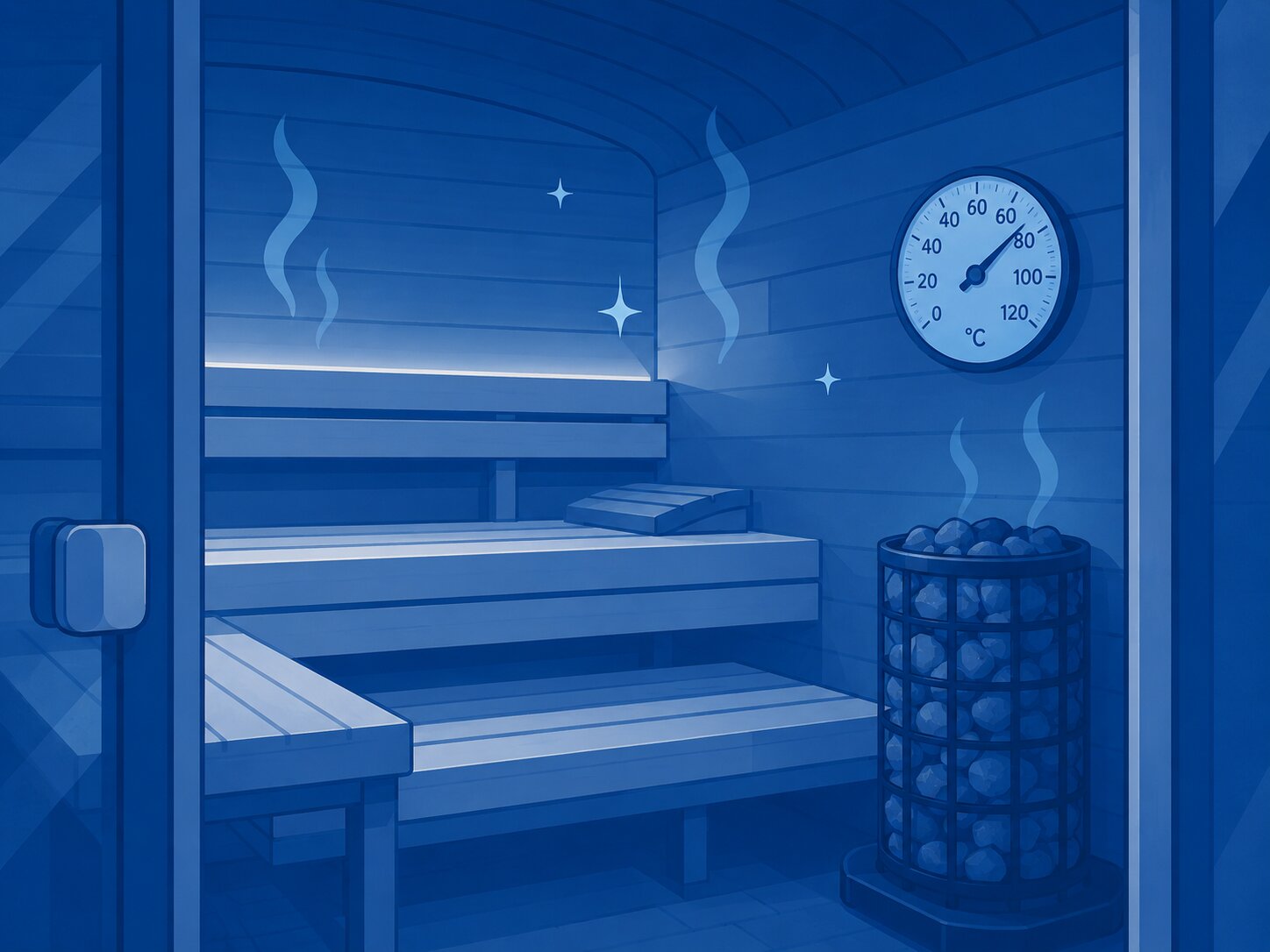
How hot is a sauna?
For most traditional saunas, the usual temperature range is around 70°C to 90°C. Some sauna bathers enjoy it cooler. Some experienced users like it hotter. But for many people at home, around 80°C is the sweet spot - warm enough to feel like a proper sauna, without turning the session into a sweaty endurance test.
That’s the thinking behind our own saunas. They come with 7kW or 9kW heaters, depending on the model, and can be dialled up to around 80°C. For most people, that’s as hot as they’ll want for a comfortable, enjoyable session.
Warm. Deep. Crisp. Controlled.
A sauna should feel like something you want to come back to. Not something you need to survive.
The quick answer - 70°C to 90°C is normal
Traditional Finnish-style saunas often sit somewhere between 70°C and 100°C, although many people are perfectly happy at around 70°C. Finland.fi, referencing the Finnish Sauna Society, says sauna temperature is a matter of preference, with 80°C to 100°C recommended by the Finnish Sauna Society and some people comfortable at 70°C. It also makes the very sensible point that competing to withstand the most heat is unhealthy.
The British Sauna Society gives a similar range, describing traditional Finnish saunas as hovering between 70°C and 100°C, while also warning against treating extreme heat like a competition.
So, the normal range is broad.
But normal doesn’t always mean ideal.
For everyday home use, especially in the UK, most people don’t need to chase 90°C or 100°C. Around 75°C to 80°C gives you the full sauna feeling - the warmth, the sweat, the calm, the reset - without making the air feel too fierce.
What does each sauna temperature feel like?
Sauna temperature is personal. A bit like bath temperature, really. One person’s “perfect” is another person’s “absolutely not”.
Still, here’s a useful guide.
60°C to 65°C feels gentle.
This can be a nice starting point if you’re new to sauna use, or if you want a softer, longer warm-up. You’ll still feel heat, but it won’t feel as intense.
70°C to 75°C feels balanced.
This is where many people start to feel the sauna properly working. The air feels hot, your breathing slows, and your body starts to sweat. It’s warm enough to feel rewarding, but not too much for most healthy adults.
Around 80°C feels like a classic sauna.
This is the crisp, enveloping heat many people have in mind when they picture a proper sauna session. It’s also the top end of what most people want for regular comfort at home.
90°C and above feels intense.
Some experienced sauna users enjoy it, but it’s not needed for a good session. For many people, it can feel harsh, especially if the air is dry, the session is long, or they’re sitting high up near the hottest part of the room.
And that brings us to a useful point.
The number on the control panel is only part of the story.
Why the same temperature can feel different
Two saunas can both say 80°C and feel quite different.
That sounds odd, but it’s true.
The feel of the heat can change based on:
- Where you sit
- How well the room holds heat
- The size of the sauna
- How long the heater has been running
- Ventilation
- The outdoor temperature
- How hydrated you are
- Whether you’ve exercised beforehand
- How used to sauna heat you are
Heat rises, so the upper benches usually feel hotter than the lower benches. A quick move down can make the session feel calmer without touching the controls.
Then there’s the UK weather. On a cold evening, stepping into a hot garden sauna feels wonderfully dramatic. That first wave of heat hits differently when the air outside is sharp and cool. In summer, the same temperature may feel heavier.
Your body plays its part too. After a workout, 80°C can feel stronger because you’re already warm. After a quiet day at your desk, it may feel calm and steady.
Same sauna. Same setting. Different day.
Why 80°C is the sweet spot for most home sauna users
There’s a reason we talk about around 80°C as a comfortable maximum for most people.
At 80°C, you get that proper sauna feel. The warmth is rich. The sweat builds. Your shoulders loosen. Your breathing changes. It feels like a real reset.
But it’s still manageable for many users.
That matters because a home sauna isn’t a one-off spa treat. It’s something you can use again and again. After work. After a run. On a Sunday evening. When the garden is quiet and your phone is finally somewhere else.
If the sauna is too hot, you may use it less. If it feels too intense, it becomes a challenge rather than a ritual.
And honestly, a sauna should not feel like a challenge.
It should feel like a pause.
Our sauna heaters - 7kW and 9kW explained simply
Our saunas come with 7kW or 9kW heaters, depending on the model.
In simple terms, heater power helps the sauna reach and hold temperature. A larger sauna needs more heating power than a smaller sauna, because there is more air and more internal space to warm through.
That doesn’t mean a 9kW heater is about making the sauna unbearably hot. It’s more about giving the sauna the right level of heat for its size, so the room feels consistent, comfortable and ready to use.
Think of it like heating a room at home. A small snug and a large kitchen-diner need different radiators. Not because one room should feel tropical and the other should feel mild, but because the space is different.
Our 7kW and 9kW heaters are there to create that strong, steady sauna heat, with control up to around 80°C.
For most people, that’s plenty.
Actually, it’s more than plenty. It’s the good bit.
Does a hotter sauna mean more health benefits?
Not really. At least, not in the simple “hotter equals better” way people sometimes assume.
A hotter sauna may make you sweat faster. It may feel more intense. But more heat does not automatically mean more benefit.
The wider wellness benefits of sauna use are usually linked to sensible, regular use rather than chasing the hottest possible session. Mayo Clinic notes that sauna use can cause reactions similar to moderate exercise, such as strong sweating and a higher heart rate, while also saying that more exact studies are still needed for some health claims.
So the smarter question is not, “How hot can it go?”
It’s, “What temperature can you use safely, comfortably and often enough to enjoy?”
For many people, that answer sits around 70°C to 80°C.
If you want the wider wellness picture, we’ll cover that separately in our guide to the health benefits of using a sauna. That article is the better place for relaxation, circulation, recovery and the general feel-good side of regular sauna time.
How long should you stay in a hot sauna?
Temperature and time go together.
A cooler session may feel comfortable for longer. A hotter session may need to be shorter. That’s common sense, but it’s easy to forget once you’re settled in and enjoying the warmth.
As a simple guide, many healthy adults keep sauna sessions around 15 to 20 minutes, with beginners starting closer to 5 to 10 minutes. Cleveland Clinic gives similar advice, suggesting sauna sessions are kept around 15 to 20 minutes, with new users starting at five minutes and building gradually.
That’s why 80°C works so well for a lot of home users. It gives you a proper sauna session without needing to sit there for ages.
Short. Warm. Restorative.
The sort of thing you can fit into real life.
If you want more detail on timing, cooling breaks and beginner sessions, read our guide on how long you should stay in a sauna.
Can a hotter sauna help you lose weight?
This is where sauna temperatures can get misunderstood.
A hotter sauna may make you sweat more. If you weigh yourself straight after, the scales may show a lower number. But that’s usually water loss, not fat loss.
Once you drink and rehydrate, that short-term weight change is likely to return.
That doesn’t mean sauna use has no place in a healthy lifestyle. It can sit nicely alongside exercise, recovery, better sleep habits and stress management. But turning the temperature higher is not a shortcut to fat loss.
More heat does not equal more fat burned.
It usually just means more sweating.
For the honest version, read our article on do saunas help you lose weight. It explains the difference between water weight and real weight loss in plain English.
How hot is too hot for a sauna?
A sauna is too hot when it stops feeling controlled.
That might be 90°C for one person and 75°C for another. Your own body is the best early warning system you have.
Leave the sauna if you feel:
- Dizzy
- Sick
- Faint
- Confused
- Very thirsty
- Weak
- Breathless
- Uncomfortably hot
- Crampy
- Headachy
The NHS lists symptoms of heat exhaustion as tiredness, dizziness, headache, feeling sick, heavy sweating, cramps, thirst and a high temperature. It advises cooling the person down and giving fluids.
That’s not meant to make sauna use sound scary. It’s simply a reminder that heat deserves respect.
Drink water. Avoid alcohol before sauna use. Build up slowly. Cool down after your session. And if you have heart problems, uncontrolled blood pressure, are pregnant, or have any health concerns, speak to a medical professional first.
Sensible sauna use is not complicated.
Start cooler. Stay shorter. Build gently.
What temperature should beginners start with?
If you’re new to sauna use, start lower than you think.
A first session at around 60°C to 70°C can be a good introduction. Stay in for a few minutes, see how your body responds, then build from there over future sessions.
You don’t need to start at 80°C just because the sauna can reach it.
That’s the nice thing about having your own sauna at home. You can use it your way. No rushing. No awkward gym changing room clock-watching. No sitting there wondering whether everyone else is somehow immune to heat.
You can set it lower, step in, settle down, and learn what feels good.
After a few sessions, many people naturally move towards 75°C or 80°C. Not because they’re trying to prove anything. Because it feels right.
Should you keep your sauna at the same temperature every time?
Not necessarily.
Some days, you may want a full, deep 80°C session. Other days, a gentler 65°C or 70°C session may feel better.
That’s normal.
After a hard workout, you might prefer a shorter session at a slightly lower heat. On a cold winter evening, you may love the full warmth. If you’re tired, busy or using the sauna before bed, gentle heat may be more appealing.
A good sauna routine has room for real life.
It doesn’t need to be rigid. It just needs to feel good, safe and repeatable.
Traditional sauna vs infrared sauna temperature
Traditional saunas and infrared saunas heat differently.
A traditional sauna heats the air in the room. That’s why temperatures are often higher, commonly around 70°C to 90°C. Infrared saunas usually run at lower air temperatures because they use infrared heat to warm the body more directly. Cleveland Clinic notes that traditional saunas are usually hotter than infrared saunas, with infrared saunas producing a lower-temperature experience.
Our focus here is traditional home sauna heat - the classic, room-warming style with a strong heater, a proper cabin feel and that crisp wave of warmth when you step inside.
It’s simple, satisfying and easy to understand.
The room warms. You warm. The day slows down.
Lovely.
How hot is a sauna? The comfortable conclusion
So, how hot is a sauna?
Most traditional saunas sit somewhere around 70°C to 90°C, with some Finnish-style sauna guidance reaching up to 100°C. But for regular home use, most people will find around 80°C more than enough for a comfortable, rewarding session.
That’s why our saunas use 7kW or 9kW heaters and can be dialled up to around 80°C. It gives you proper sauna heat without pushing things into uncomfortable territory.
Hotter isn’t always better.
Better is better.
Better control. Better comfort. Better rhythm. Better evenings in the garden, with warm timber around you, cool air waiting outside, and a few quiet minutes that feel like they belong only to you.

Share: