

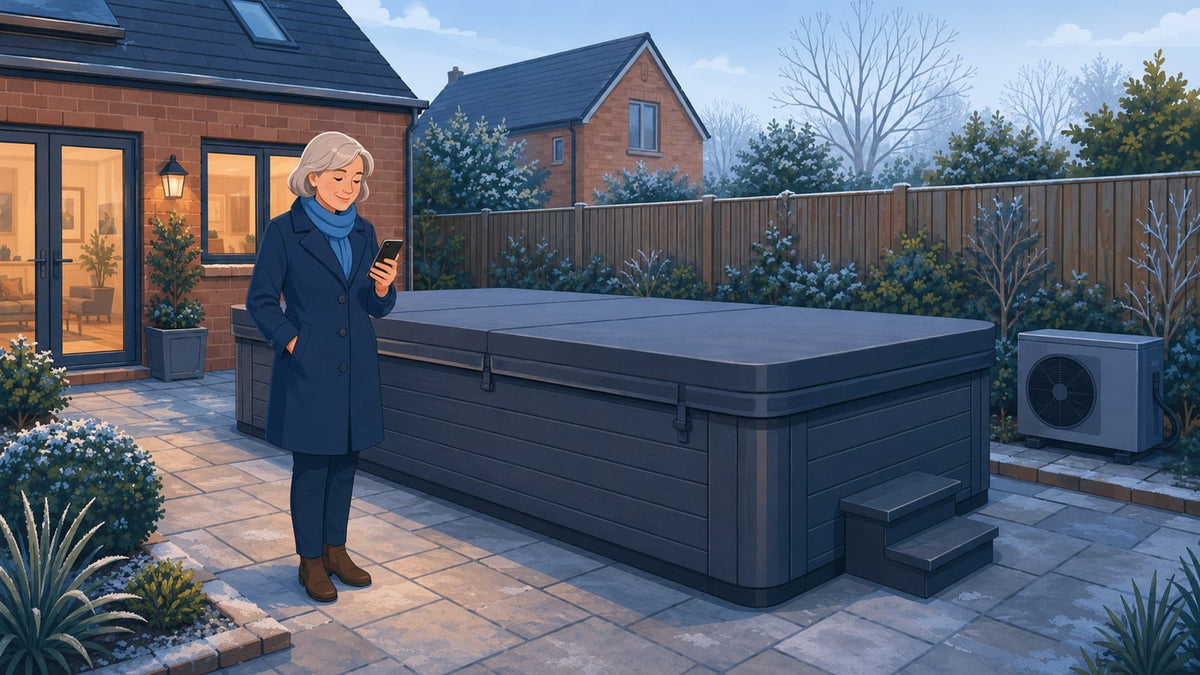
There is no honest single answer to how much a swim spa costs to run. As a broad guide, many UK installations could fall somewhere around £100 to £250 per month in overall running costs. An efficient, smaller installation may cost less, while a large spa used often, kept warmer or exposed to winter weather can cost more.
Electricity is usually the largest expense. Water treatment and periodic maintenance add smaller amounts. The final figure depends on the spa, its insulation, the cover, your preferred water temperature, how often you use it and what you pay for electricity.
If you are still getting to grips with the basics, our guide to what a swim spa is explains how these compact swimming pools work.
How much does a swim spa cost to run per month?
A broad monthly range is more useful than a neat daily promise. Swim spa energy use changes with the seasons, and no two households use their spa in quite the same way. The £100 to £250 range above is an illustration, not a guarantee or a tested cost for every H2O model.
A lower-cost setup
A smaller, well-insulated swim spa with a sound cover, moderate use and a sensible water temperature may sit towards the lower end of the range, or sometimes below it. A sheltered location and an efficient heating system can help too.
A typical year-round setup
A well-built swim spa used regularly throughout the year is likely to sit somewhere in the broad middle. Its bill will still move from month to month. A mild September and a cold, windy January are different jobs for the heater.
A higher-cost setup
A large swim spa, frequent use of powerful counter-current pumps, a high water temperature, long periods with the cover open or poor heat retention can push costs beyond the headline range. Dual-zone designs can have different demands again.
Running costs are separate from the initial purchase and installation. If you are weighing up the full investment, read our guide to how much a swim spa costs in the UK.
Electricity is the biggest swim spa running cost
A swim spa uses electricity to heat the water and maintain its temperature. It also powers circulation, filtration, controls, lighting, hydrotherapy pumps and the counter-current system you swim against. Initial heating after a refill can create a noticeable spike, while day-to-day heating is about replacing the heat that escapes.
The basic calculation is simple:
Energy consumed in kWh x your electricity unit rate = electricity cost.
The hard part is predicting the energy consumption. Hydropool, for example, publishes an estimate of about 600kWh per month for one efficient mid-range swim spa under its own stated conditions, including roughly an hour of use a day. That example is useful because it shows why the unit rate matters, but it is not an expected figure for every swim spa or an H2O consumption claim.
For context, Ofgem's average capped electricity rate for a standard variable tariff paid by Direct Debit is 26.11p per kWh from 1 July to 30 September 2026. It is an average across England, Scotland and Wales, and fixed or specialist tariffs can differ. Check your own bill before estimating. We do not add the household standing charge because you would normally pay it whether or not you owned a swim spa.

What affects swim spa running costs?
Swim spa size and water volume
A larger body of water usually needs more energy to heat. It also has a greater surface area from which heat can escape. Size is not the whole story, though. A larger spa with strong insulation may retain heat better than a smaller, poorly insulated one.
Insulation
Heat can escape through the shell, cabinet, base, plumbing area and the top of the water. The heating system then has to put that energy back. Good insulation is therefore a practical buying consideration for year-round UK use, not a minor technical detail.
Our swim spas use ECO HeatBank insulation to reduce heat loss through the cabinet. When you compare our range of swim spas, look at insulation alongside dimensions, seating and swim performance.
The cover
The water surface is a major route for heat loss. A well-fitted insulated cover helps hold heat whenever the spa is not in use. A damaged, badly fitting or waterlogged cover will not perform as well, and leaving it open for longer than needed gives warm air an easy escape route.
Water temperature
The greater the gap between the water temperature and the outside air, the harder the heating system must work. A spa used mainly for exercise may be kept cooler than one used for warm-water relaxation. There is no single ideal setting for every owner.
How often you use it
Regular use means more cover-off time and more pump operation. Swimming against a strong current for an hour has a different demand from gentle hydrotherapy. Bathers also introduce contaminants, so heavier use can increase filtration and water-care needs.
Summer, winter and location
UK swim spa running costs are seasonal. Warm summer air reduces the temperature gap. Cold air and wind increase it. An exposed garden can lose heat faster than a sheltered patio, particularly when the cover is open.
Shelter can help, but keep access, drainage, ventilation and future servicing in mind. Do not box the equipment area in simply to block the wind.
Do dual-zone swim spas cost more to run?
A single-zone swim spa has one body of water at one temperature. A dual-zone design has two separate bodies of water that can be controlled independently, such as a cooler swimming end and a warmer hot-tub end.
That extra flexibility can increase energy use, but it does not mean a dual-zone spa automatically costs twice as much. The result depends on the volume and temperature of each zone, insulation, cover quality, weather, use and heating equipment. The useful question is not simply how many zones it has. It is how each zone will be used.
Can an air-source heat pump reduce the cost?
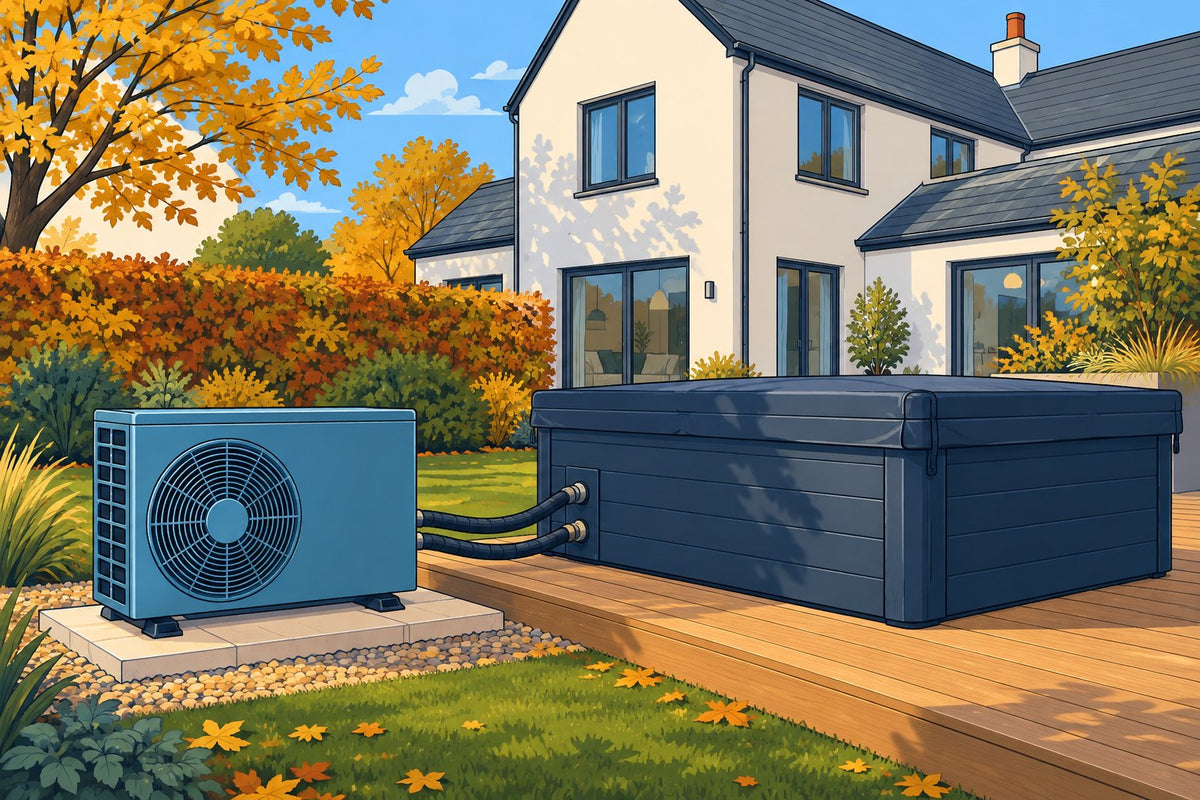
A standard electric spa heater turns electricity directly into heat. An air-source heat pump moves heat from the surrounding air into the water, so it can use less electricity to provide the same amount of heat.
A suitable full-inverter swim spa heat pump can materially reduce the electricity needed for heating, but no percentage applies to every installation. Performance changes with air temperature, target water temperature, pump sizing, plumbing, insulation, operating mode and use.
There is also an extra purchase and installation cost. Compare that upfront expense with likely long-term use rather than looking only at the next electricity bill.
What about chemicals and water care?
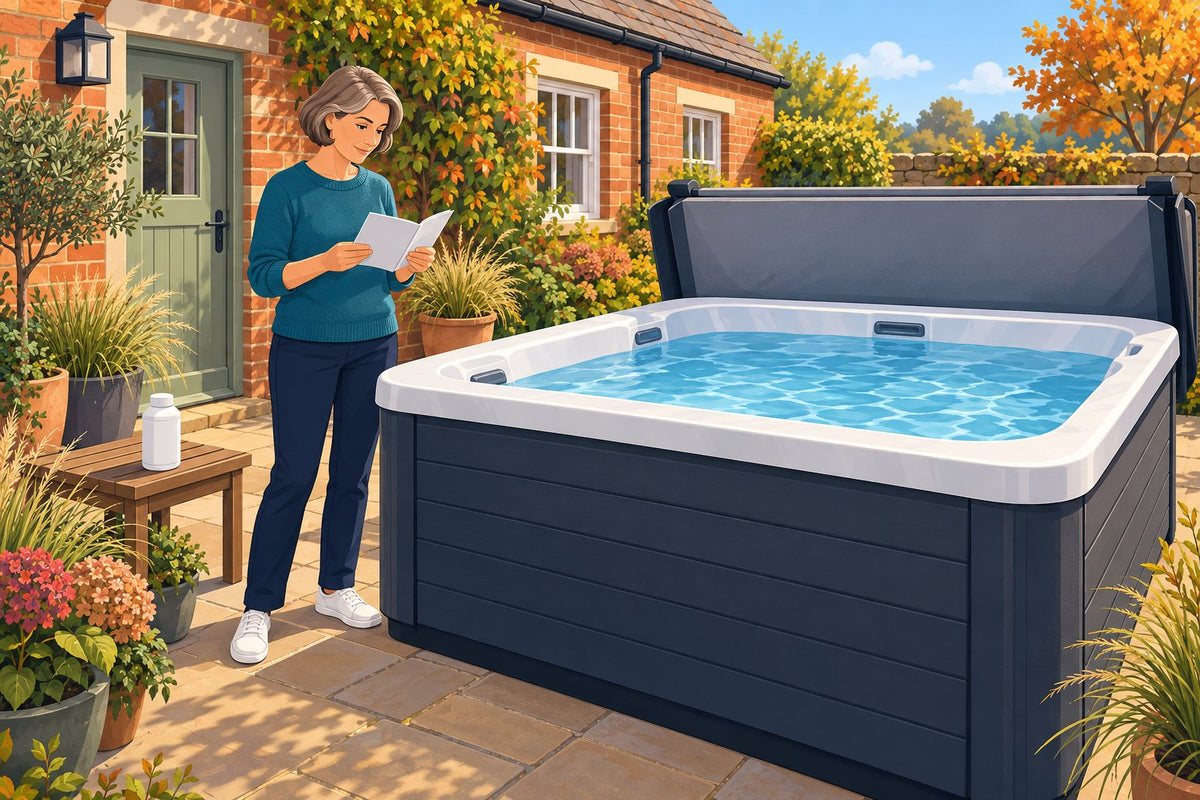
Swim spa owners need sanitiser, pH adjustment products, test strips or reagents and occasional shock treatment. Other balancing products may be needed depending on the source water.
Think in terms of tens of pounds a month rather than hundreds, but treat that as planning guidance only. Water volume, bather load, frequency of use and good testing habits all affect consumption. Guessing and repeatedly correcting the water can waste chemicals, while a steady routine tends to be more economical.
How much does the water itself cost?
Water is normally a small part of ownership beside electricity. The cost depends on spa capacity, local water and sewerage charges, whether the property is metered and how often the water is changed.
Do not assume every swim spa needs the same refill schedule. Use, filtration, water care and the manufacturer's advice all matter. A refill figure based on one brand's system should not be applied to every spa.
Filters, servicing and longer-term maintenance
Electricity and water care are day-to-day running costs. Filters, servicing, replacement covers and wear-and-tear parts are longer-term ownership costs. Pumps, heaters and controls may also need attention over the life of the spa.
It can be sensible to keep a maintenance fund, but dividing an assumed future repair by 12 and calling it a guaranteed monthly cost creates false precision. Keep these periodic expenses separate when comparing ownership budgets.
How to reduce swim spa running costs
- Use a good insulated cover and keep it fitted when the spa is not in use.
- Choose a swim spa designed with strong cabinet, shell and base insulation.
- Replace a damaged or waterlogged cover before its heat retention becomes poor.
- Keep water at a temperature that suits its real use, rather than hotter by habit.
- Limit unnecessary cover-off time, especially in cold or windy weather.
- Keep filters clean so water can circulate without avoidable restriction.
- Use the filtration schedules recommended for the spa and your usage.
- Consider a correctly sized air-source heat pump.
- Check whether a suitable off-peak electricity tariff fits your household and controls.
- Shelter the spa from strong wind without blocking access or ventilation.
- Choose the right size for the people and activities you expect.
- Use economy or holiday settings as the manufacturer advises when you are away.
Avoid shortcuts that interfere with water quality, circulation or frost protection. Saving a little energy is not worthwhile if it risks damage or leaves the water unsafe.
Should you turn a swim spa down when it is not being used?
For frequent use, large temperature changes can be inconvenient and may require a long reheating period. Swim spas are designed to maintain water quality and temperature between normal sessions, so switching one off after each use is not the answer.
For a longer absence, an economy or holiday mode may reduce energy use. The best setting depends on the season, frost risk and the control system. Follow the manufacturer's instructions rather than simply cutting the power.
Are swim spas expensive to run?
A swim spa holds far more water than a typical hot tub and uses powerful swimming equipment, so it can add a meaningful amount to the electricity bill. That cost should be weighed against how often the household will swim, exercise, relax or use hydrotherapy throughout the year.
Build quality matters. So do heating technology and the way the spa is used. A transparent monthly budget is far more useful than an attractive daily figure based on conditions that may not resemble your garden or routine.

How can you estimate your own swim spa running cost?
Start with expected or measured electricity consumption for the specific spa and installation, where reliable data is available. Multiply the kWh used by the unit rate on your own electricity bill. Then add a sensible allowance for water treatment, while keeping servicing and replacement items in a separate longer-term budget.
Once the spa is installed, smart-meter readings are more useful than theory. Compare similar periods, allow for other household loads and keep notes on temperature, weather and use. Over time, you will see what changes make a real difference.
Swim spa running costs: frequently asked questions
How much electricity does a swim spa use?
There is no universal figure. Size, insulation, cover quality, heating system, water temperature, weather and usage all affect consumption.
How much does a swim spa cost to run per day?
A fixed daily claim can mislead because usage and weather change. A broad overall window of about £100 to £250 per month may be useful for early planning, but your installation could fall below or above it.
Are swim spas expensive to run in winter?
They usually need more heating energy in cold conditions because the gap between the water and outside air is greater. Wind and cover-off time can add further heat loss.
Does a larger swim spa cost more to run?
It can, because there is more water to heat. Insulation, cover quality and heating efficiency can be just as important as size.
Does a swim spa heat pump save money?
It can reduce the electricity used for heating. The saving depends on the equipment, installation, air temperature, target water temperature and how the spa is used.
Do dual-zone swim spas cost more to run?
They can use more energy because two bodies of water may be held at different temperatures. There is no simple multiplier that applies to every dual-zone design.
Should a swim spa be turned off between uses?
No. It needs to maintain filtration and protect the water between normal uses. For longer absences, use the recommended economy or holiday settings.
How much do swim spa chemicals cost?
They are usually a much smaller expense than electricity. Allow for tens of pounds per month as broad planning guidance, with actual use shaped by water volume, bathing and maintenance habits.
How much does a swim spa cost to run? The honest answer
For early budgeting, around £100 to £250 per month is a reasonable broad illustration for many UK installations, but it is not a promise. Your spa, garden, tariff, temperature and routine decide where the real figure lands.
Look beyond a headline daily cost. Compare insulation, cover quality, heating choices and spa size, then use your own electricity rate. If you want help matching those factors to your plans, explore our swim spas or speak to the team at H2O Hot Tubs.
Share: