

Green water is a clear sign that something has changed in your hot tub, but it does not always mean the same thing. Clear water with a transparent green tint often points to metals in the fill water. Cloudy green water, a slippery shell or a weak sanitiser reading makes poor water hygiene or algae more likely.
Do not rely on colour alone. Stop bathing, test the water and look at its clarity, smell and feel before choosing a treatment. This guide explains how to narrow down the cause, what you can safely do at home and when fresh water is the simplest answer.
Why is my hot tub water green?
Hot tub water usually turns green for one of two broad reasons:
- Dissolved metals: copper, iron or manganese in the source water can react after an oxidiser or sanitiser is added. The water may stay clear but take on a green or blue-green tint.
- Poor water hygiene: low sanitiser, weak circulation, a dirty filter or unsuitable water balance can allow contamination and, in some cases, algae to develop. The water is more likely to look cloudy, smell stale or feel slippery.
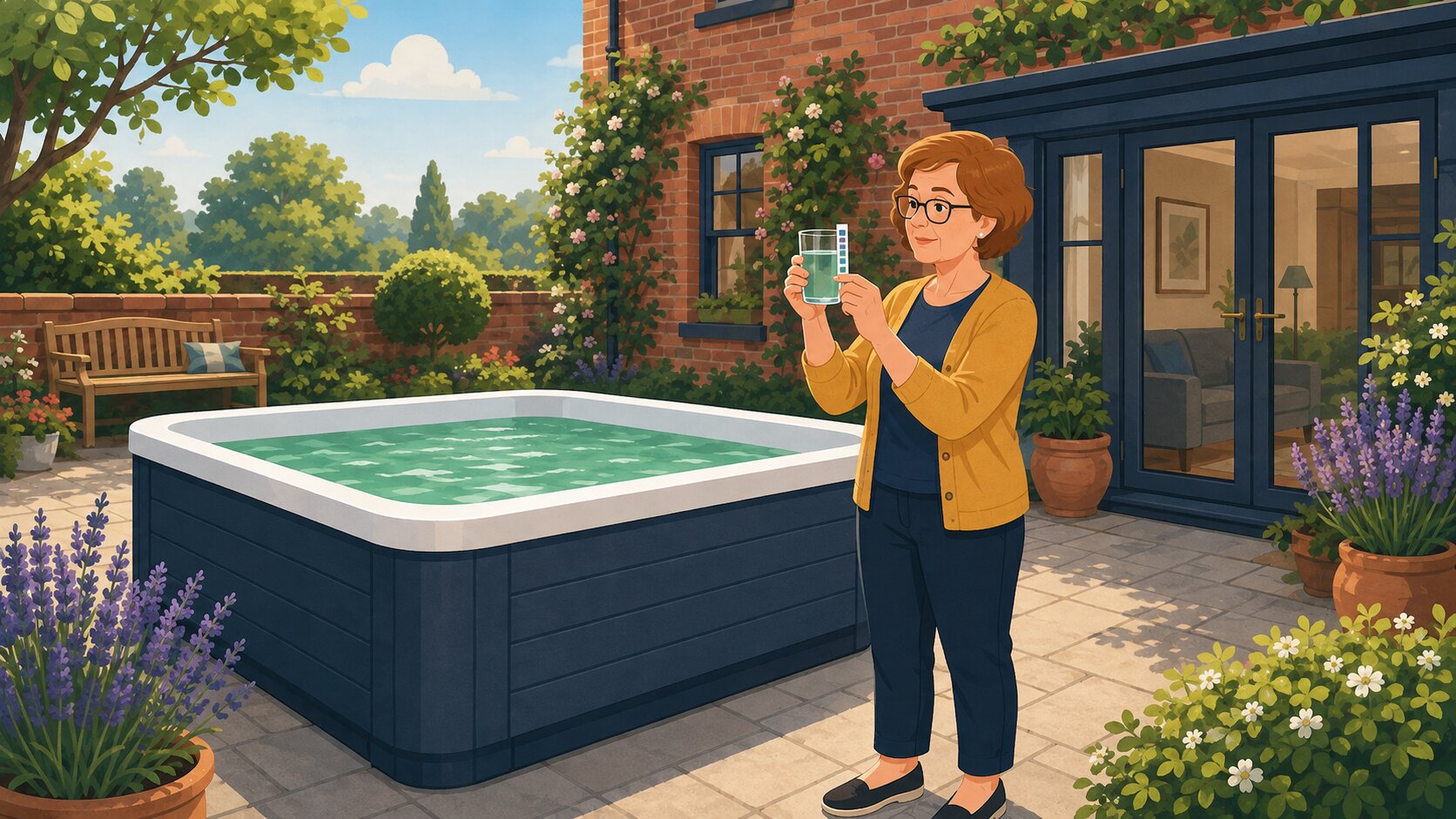
A coloured hot tub shell, underwater lighting and nearby plants can also cast a green reflection. Take a sample in a clean, clear glass and view it in natural daylight. If the sample looks clear and colourless away from the spa, the apparent colour may be caused by its surroundings rather than the water.
First, do not use green hot tub water
Do not get in until you understand the cause and the water has returned to the correct sanitiser and pH range for your system. A mineral tint is not the same as an algae problem, but you cannot confirm that safely by sight alone.
BISHTA advises domestic owners to test the sanitiser and pH before use. If the water is cloudy, slimy, smells unpleasant or will not hold a sanitiser residual, treat it as a hygiene problem. Keep the cover secured so children and pets cannot reach the spa while you investigate.
Clear green water and cloudy green water mean different things
The water's appearance provides the quickest starting point.
Clear water with a green tint
When you can see the footwell and fittings clearly, dissolved metals are a common explanation. Copper can give water a blue-green cast. Iron or manganese may produce green, yellow, brown or rusty tones depending on the concentration and the water chemistry.
The colour may appear soon after a refill or after adding chlorine or shock. Oxidation changes the metal into a form that is easier to see. That can make the treatment look like the cause even though the metal was already present in the source water.
Cloudy, dull or murky green water
Cloudiness points towards suspended material, poor filtration, unsuitable water balance or inadequate sanitation. Algae is possible, especially if the sanitiser has been low and the spa has spent time uncovered in daylight, but green cloudiness should not be diagnosed as algae without checking the rest of the water.
A dirty filter, old water and a heavy bather load can create similar symptoms. Our guide to cloudy hot tub water covers those broader causes in more detail.
Green water with a slippery shell
A slick or slimy surface is a stronger warning that microorganisms or biofilm may be present. Do not simply add colour-correcting products and carry on bathing. The shell, filters, cover underside and internal pipework may all need attention.

Common causes of green hot tub water
1. Metals in the fill water
Mains water, private supplies and water carried through older plumbing can contain small amounts of metal. The amount varies by location and source. A spa can look normal as it fills, then change colour when sanitiser or shock oxidises the metal.
A clean white bucket filled from the same tap can provide a useful comparison. A hot tub dealer or water-testing service can confirm metals more reliably than a standard spa test strip, which usually focuses on sanitiser, pH and alkalinity.
2. Low sanitiser
Sanitiser is consumed as it deals with sweat, skin oils, cosmetics and other organic material. Heavy use, warm weather, sunlight and missed doses can all make the reading fall faster. Once the residual is too low, water quality can deteriorate quickly.
If chlorine seems to disappear soon after every dose, read our guide to high chlorine demand. Adding ever larger amounts without finding the cause can make the water harder to manage.
3. pH or total alkalinity outside the right range
Water balance affects sanitiser performance, bather comfort and the condition of the equipment. An unsuitable pH can make discolouration, cloudiness, corrosion or scale more likely. Low total alkalinity can also allow the pH to swing after small chemical additions.
Test with an in-date kit and follow the ranges specified for your hot tub and treatment system. Adjust total alkalinity first, then pH, and add products gradually according to their labels. Our hot tub water care guide explains the basic order.
4. A dirty filter or weak circulation
The filter removes particles only when water can pass through it. A clogged cartridge, a short filtration schedule or a circulation fault can leave debris suspended and reduce the movement of sanitised water around the spa.
Remove and clean the filter only as the manufacturer directs. Check the water level and make sure the normal circulation inlets and outlets are not blocked. If flow remains weak or an error appears, stop and arrange a service rather than opening electrical or plumbing compartments.
5. Old or overloaded water
A hot tub contains a relatively small volume of warm water. Each bathing session adds material that the filter cannot remove completely. Treatment products and dissolved solids also accumulate over time. Eventually, the water may resist correction even when individual test readings look reasonable.
If several treatments have failed, a drain, clean and refill can be safer, quicker and less wasteful than continuing to add products. See how often to change hot tub water for the signs that a reset is due.
How to fix green hot tub water safely
Step 1: Stop bathing and take a proper sample
Turn off the jets and allow bubbles to settle. Collect water from below the surface in a clean container, away from a return jet. Look at it in daylight against a white background. Note whether it is clear, cloudy, smelly or leaving a slippery feel on the shell.
Step 2: Test sanitiser, pH and total alkalinity
Use an in-date test kit that matches your sanitiser. Follow its timing instructions exactly, since reading a strip too early or too late can mislead you. If the result is outside the range in your manual or treatment instructions, correct it in the recommended order.
Never mix chemicals, never add unlabelled products and never guess a dose. Add chemicals to water, not water to chemicals, and keep them away from children and pets.
Step 3: Choose the metal or hygiene route
If the water is clear and green: ask your dealer or a water-testing service to check for copper, iron and manganese. A spa-approved metal-control or sequestering product may bind the metals so the filter can help remove them. Follow the product label, run the specified circulation and clean the filter afterwards. Do not use a household water treatment product in a hot tub.
If the water is cloudy, smelly or slippery: treat it as a sanitation problem. Correct the balance, clean the filter and follow the shock or disinfection process specified for your sanitiser and spa. If the water remains green, the sanitiser will not hold or slime is present, drain and clean the spa instead of repeatedly dosing it.
Step 4: Clean the parts the water touches
When contamination is suspected, the water is only part of the job. Clean the shell, waterline, filters, pillows and underside of the cover with products approved for those surfaces. Follow the manufacturer's process for internal pipework. Our guide to cleaning a hot tub covers the main areas.
Step 5: Refill carefully when a reset is needed
Switch off and isolate the hot tub as the manual directs before draining. Dispose of treated water responsibly and keep it away from surface drains, ponds and places where it may collect. Run the filling hose for a short time away from the spa before use, then keep an air gap between the hose and the water.
If metals are known to be present, ask whether a hose pre-filter or spa-approved metal-control product is suitable for your water and equipment. Balance the new water in the correct sequence, establish the sanitiser residual and retest before bathing.

What not to do when hot tub water turns green
- Do not swim first and test later. Colour and cloudiness mean the water needs checking.
- Do not assume every green tint is algae. Treating a metal problem as algae can waste chemicals and may deepen staining.
- Do not add several products together. Their reactions can be dangerous and can make the diagnosis harder.
- Do not keep shocking water that will not recover. Old or contaminated water may need to be replaced.
- Do not use household bleach, washing products or improvised cleaners. Use only products approved for your spa and sanitation system.
- Do not pressure-wash a filter cartridge. Excessive force can damage its media.
How to prevent green hot tub water
- Test the sanitiser and pH before use and keep a simple record of unusual changes.
- Keep the cover fitted when the spa is not in use, while still following chemical-label instructions about ventilation after dosing.
- Rinse bathers before entry and keep laundry detergent, cosmetics and garden debris out of the water.
- Clean the filter on schedule and replace it when damaged or no longer cleans properly.
- Use the filtration settings recommended for your model and level of use.
- Test the source water if discolouration returns soon after every refill.
- Change ageing water before it becomes difficult to balance.
A steady routine is more useful than chasing the water with extra chemicals. If you are new to ownership, the advice pages from H2O Hot Tubs can help you understand the basics without tying the guidance to an individual model.
Frequently asked questions about green hot tub water
Can too much chlorine turn hot tub water green?
Chlorine itself does not usually colour the water green. Adding chlorine can oxidise copper or iron that was already dissolved in the water, making the metal visible. Test the water and check for metals before adding more treatment.
Can you shock green hot tub water?
Shock may form part of the response when low sanitiser, organic contamination or algae is suspected. It is not the right fix for every green tint. Clear green water caused by metals needs a different approach, and heavily contaminated or old water may be better drained and replaced. Follow the label and your spa manufacturer's instructions.
Why did the water turn green straight after a refill?
Metals in the source water are a likely cause, especially if the water remains clear and the colour appeared after adding sanitiser or shock. A water test can confirm this. A dirty hose, contaminated filter or residue left in the spa can also affect a fresh fill.
How long does green hot tub water take to clear?
There is no safe universal time because the cause, severity, water volume, circulation and treatment system all differ. Follow the product or manufacturer's process, then judge the result by fresh test readings and clear, clean water, not by the clock alone.
Should I drain green hot tub water?
Drain and refill if the water is slimy, persistently cloudy, will not hold sanitiser, is old or does not respond to the correct treatment. A mild, clear metal tint may be treatable without draining once the water balance and metal content have been confirmed.
Hot tub water green? Identify the cause before treating it
Clear green water often suggests metals. Cloudy, smelly or slippery green water points towards a sanitation, filtration or contamination problem. That distinction keeps you from adding the wrong treatment and helps protect both bathers and the spa.
Stop using the hot tub, test the water, correct the basics and choose the remedy that matches the evidence. If the water does not respond, or you cannot confirm that it is hygienically safe, drain and refill or ask a trained hot tub professional to inspect it.
Share: