

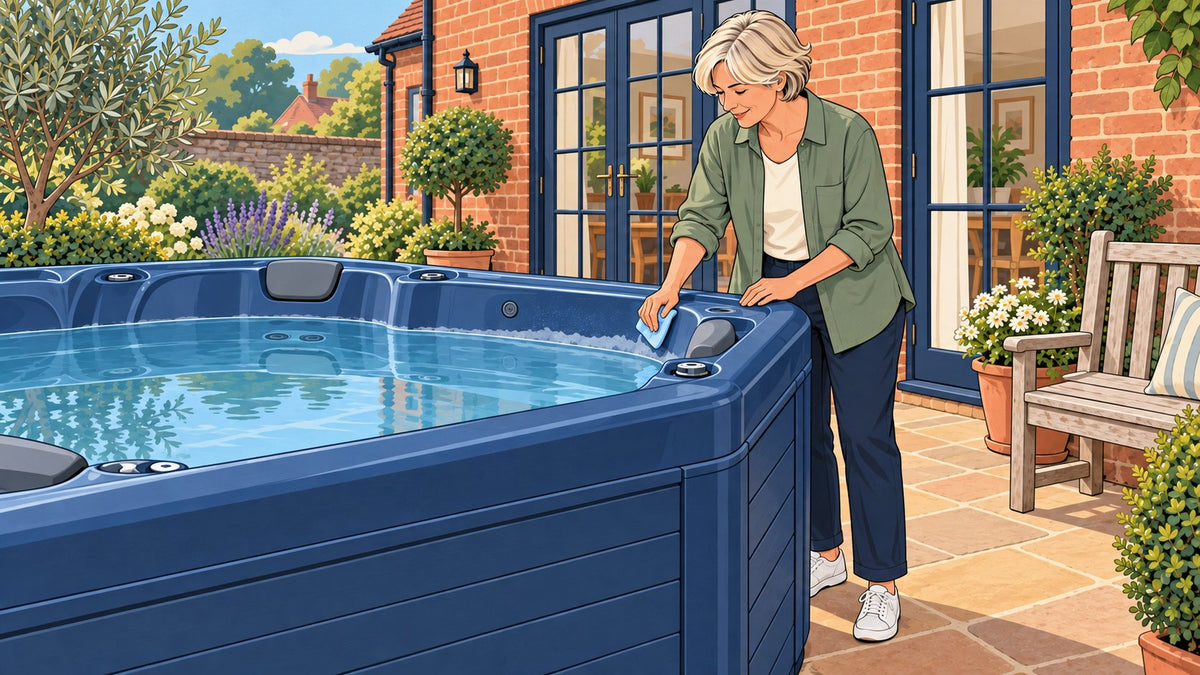
That pale, rough line around a hot tub is not usually dirt. It is often limescale: a mineral deposit left behind when hard water, heat and water balance combine.
A little scale can look harmless. Left alone, it may build around jets, cling to the shell and add strain inside the heater or pipework. Scrubbing harder is not the answer. The useful fix is to work out why the scale formed, remove what you can safely reach and correct the water conditions that caused it.
This guide explains what hot tub limescale looks like, how it differs from other marks and what owners can do without damaging the spa.
What is hot tub limescale?
Limescale is a hard mineral deposit, usually formed mainly from calcium carbonate. Your mains water naturally contains dissolved minerals. The Drinking Water Inspectorate explains that water hardness comes largely from dissolved calcium and magnesium, with the amount varying by local geology.
Those minerals are not automatically a problem. A hot tub needs balanced water rather than water with no minerals at all. Trouble starts when conditions encourage the dissolved calcium to leave the water and settle on a surface.
In a spa, scale often appears as:
- a white, cream or grey chalky line at the water level;
- rough patches around jets, pillows or waterfalls;
- pale flakes or gritty particles in the water;
- a crust on heater parts or plumbing that an owner may not be able to see;
- a filter that feels stiff or looks coated after cleaning.
Not every pale mark is scale. Dried sanitiser, body products and residue from cleaning chemicals can look similar. Scale normally feels hard or gritty and returns unless the water balance is corrected.
Why does limescale form in a hot tub?
Hard fill water supplies the raw material, but hardness alone does not explain every case. Temperature, pH, alkalinity, aeration and evaporation all affect whether minerals remain dissolved.
Hard fill water contains more calcium
Hard water contains more dissolved calcium and magnesium than soft water. Many parts of the UK have hard or very hard mains water, although the exact reading can vary within the same county. Your water supplier's quality report or a suitable hardness test gives a better answer than a national map.
A high calcium reading means there is more material available to form deposits. It does not mean scale must appear. Well-balanced hard water can often be managed without drama.
High pH makes scale more likely
BISHTA warns that water which is too alkaline is more likely to form damaging scale. Its domestic water-care guidance recommends keeping hot tub pH between 7.0 and 7.6, alongside suitable sanitiser and total alkalinity levels.
If your pH keeps climbing, read our guide to hot tub pH. Correcting pH without understanding total alkalinity can lead to a frustrating cycle of adding chemicals and watching the reading bounce back.
Heat and aeration change the water
A hot tub is warm and heavily aerated. Jets drive carbon dioxide out of the water, which can push pH upwards. Warm water and rising pH make calcium carbonate less willing to stay dissolved, so it settles on nearby surfaces.
This is why scale may appear fastest around a waterfall, air control, jet face or heater rather than across the whole shell.
Evaporation concentrates what remains
Water evaporates, but calcium does not. Repeatedly topping up without periodic water changes can gradually concentrate minerals and other dissolved material. A well-fitting cover reduces evaporation, yet it cannot remove what is already in the water.

Calcium hardness, pH and alkalinity are not the same thing
These three readings work together, but each measures something different:
- Calcium hardness tells you how much dissolved calcium is present.
- pH tells you how acidic or alkaline the water is at that moment.
- Total alkalinity shows how strongly the water resists a change in pH.
Lowering pH does not remove calcium from the water. It may help keep calcium dissolved and slow new scale, but the hardness reading remains. A partial or full refill with more suitable water may be needed when calcium is far outside the range specified for the spa.
Palintest includes calcium hardness among the core pool and spa test parameters. It notes that a high result can cause deposits, whilst a result that is too low may encourage erosion. That is why chasing the lowest possible hardness number is a mistake.
How do you test for hard water in a hot tub?
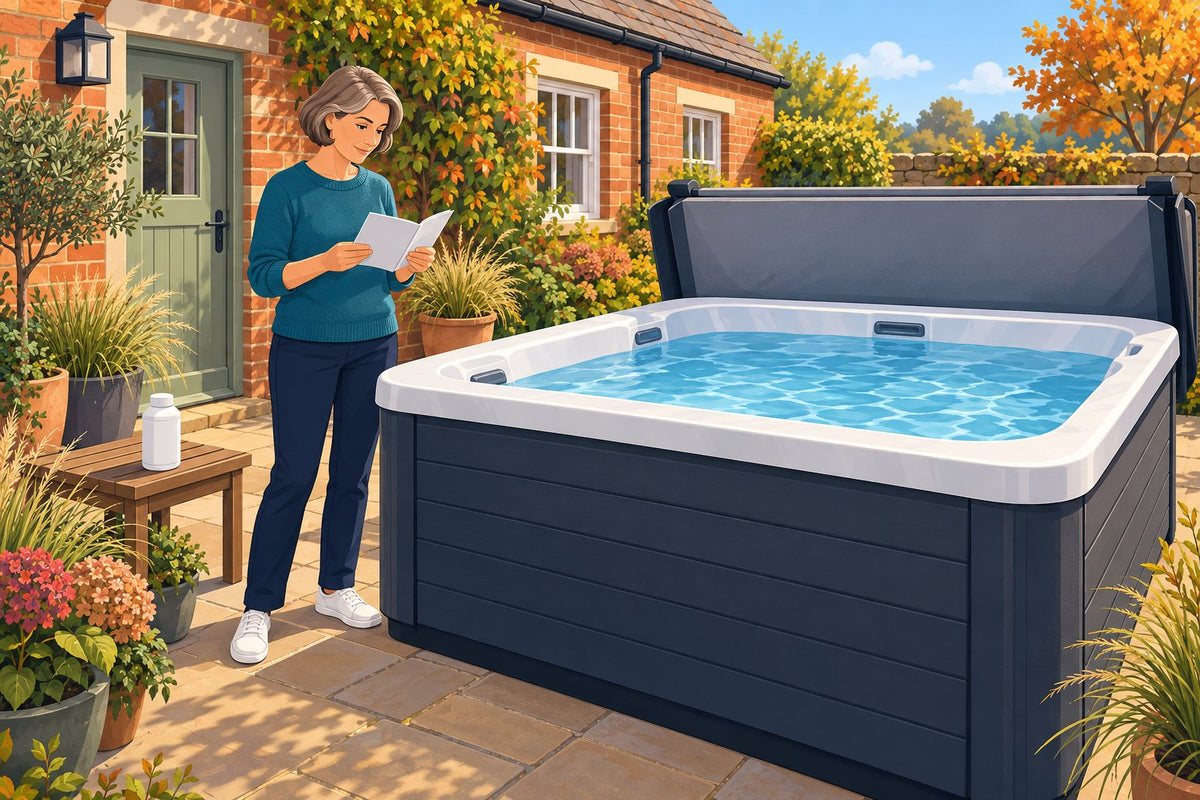
Use a test strip or drop kit that includes calcium hardness and is designed for spas or pools. A standard strip that checks only sanitiser, pH and total alkalinity cannot tell you the hardness.
For a useful reading:
- Check the product is in date and stored dry.
- Take the sample away from a jet, dispenser or recently added chemical.
- Follow the timing on the test instructions exactly.
- Compare the result with the range in your hot tub manual or water-care instructions.
There is no sensible universal target for every spa, finish and treatment system. Manufacturer guidance takes priority. If the result is difficult to read or seems implausible, a dealer or water-testing service can confirm it before you add anything.
How to remove light limescale from a hot tub
Start gently. Acrylic and jet finishes can scratch or lose their shine if you attack them with household bathroom products.
1. Test and record the water first
Write down calcium hardness, pH, total alkalinity and sanitiser. This helps you treat the cause rather than wiping away the evidence and waiting for it to return.
2. Switch the spa off when the manual requires it
If your hands will be near a suction fitting, filter housing or water that is being lowered, isolate the spa as directed by its manual. Never reach into operating equipment or remove service panels for routine scale cleaning.
3. Use an approved spa-surface cleaner
For a light mark above the waterline, use a soft cloth and a cleaner approved for the shell. Follow its contact time and rinse instructions. Keep the product out of the water unless it is specifically made for use in a filled hot tub.
4. Work on a small area
Do not scrape the shell with a knife, metal tool, abrasive pad or pumice stone. If gentle cleaning does not shift the deposit, stop before the finish is damaged.
5. Clean the filter separately
Mineral deposits can coat the filter pleats. Rinse the cartridge and use a compatible filter cleaner if required. Our hot tub filter cleaning guide shows the full process and the products to avoid.
What about heavy scale inside the heater or pipes?
Internal scale needs a different approach. It may restrict flow, coat the heater and contribute to slow heating or high-limit faults. You cannot judge the condition of hidden pipework from the waterline alone.
Signs that need professional advice include:
- repeated flow or heater errors;
- weak circulation that does not improve after filter cleaning;
- gritty flakes returning soon after cleaning;
- slow heating alongside a history of high pH or heavy scale;
- a visible crust inside parts that the manual does not tell you to remove.
Do not pour kettle descaler, brick acid or domestic limescale remover into the spa. Internal descaling products and procedures must suit the heater, seals, shell and treatment system. Ask the retailer or a spa engineer what the manufacturer permits.
If heat is the main problem, our hot tub not heating guide separates simple water-flow checks from faults that need an engineer.
How to prevent hot tub limescale
Test the fill water
Check calcium hardness when you first fill the spa, not only after deposits appear. This gives you a baseline and helps you choose the right treatment routine.
Keep pH and alkalinity steady
Test pH and sanitiser before use, as BISHTA advises, and check total alkalinity as part of the routine. Add adjustment chemicals in small stages and allow them to circulate before retesting. Large corrections can overshoot.
Use a compatible scale-control product when needed
A scale inhibitor can help keep minerals suspended in hard-water areas. It does not remove calcium and it is not a substitute for correct pH. Use only a product compatible with your sanitiser, filter and spa manufacturer, following the label dose.
Change ageing water
When repeated top-ups and chemical additions make the water difficult to manage, a fresh start may be simpler. Our guide to changing hot tub water explains the warning signs and safe refill process.
Inspect the places scale appears first
Run a finger around the waterline and look at jet faces, waterfalls and the filter at each weekly check. A faint roughness is easier to deal with than a thick crust.

Should you fill a hot tub with softened water?
Not without checking the hot tub manufacturer's advice. A domestic ion-exchange softener replaces calcium and magnesium with sodium. That may reduce scale, but fully softened water can sit below the hardness range intended for the spa and may be more corrosive or prone to foaming.
Some manufacturers allow a blend of hard and softened water. Others tell owners to bypass the softener and use a compatible scale-control product instead. The correct route depends on the spa and water-care system, so treat the manual as the deciding source.
Common limescale mistakes
- Assuming every white mark is scale. Test the water and inspect the texture before treating it.
- Lowering pH without checking alkalinity. The reading may rise again because the underlying buffer remains high.
- Using household descaler. Products made for taps and kettles may harm the shell, seals or water chemistry.
- Scraping acrylic. A scratch can be harder to fix than the original deposit.
- Aiming for zero hardness. Water that is too soft creates a different set of risks.
- Treating the shell but ignoring the filter. A coated filter can keep circulation poor.
- Adding several chemicals together. Follow each label and never mix concentrated spa chemicals.
Frequently asked questions about hot tub limescale
Is limescale in a hot tub dangerous?
Scale itself is a mineral deposit, but its presence shows the water needs attention. Rough surfaces can harbour residue, and heavy internal scale may affect flow or heating. Do not use the appearance of clear water as proof that sanitiser and pH are correct.
Can high pH cause limescale?
Yes. High pH makes calcium carbonate more likely to leave the water and form deposits, especially when the fill water is already hard.
Will pH reducer remove existing scale?
Correcting pH can help prevent more scale, but it may not safely remove a thick deposit that is already bonded to the shell or equipment. Clean accessible areas with an approved product and get advice for internal scale.
Can vinegar remove hot tub limescale?
Vinegar can dissolve mineral deposits, but that does not make it suitable for every spa surface or for adding to the water. Use it only if the manufacturer permits it, at the dilution and location specified. An approved spa cleaner is the safer default.
Why did limescale appear soon after a refill?
The new water may be hard, or pH may have risen quickly as the water warmed and the jets ran. Test hardness, pH and total alkalinity rather than assuming the refill water is already balanced.
Does limescale mean I need to drain the hot tub?
Not always. A light surface mark with manageable readings may be corrected without draining. A refill becomes more likely when hardness is far outside the manufacturer's range, the water is old, deposits return quickly or an approved cleaning process requires an empty spa.
Hot tub limescale is easier to prevent than remove
The best response to limescale is not stronger scrubbing. Test the fill water, keep pH and alkalinity steady, use compatible scale control where needed and deal with the first rough mark before it becomes a crust.
For heavy deposits, repeated heater or flow errors, or uncertainty about softened water, ask the retailer or a qualified spa engineer before adding another product. If you are still choosing a spa and want clear ownership guidance from the start, visit the H2O Hot Tubs homepage.
Share: